
Thursday, 03/07/2025
Share This Article :
By Dr. Siti Nurain Muhmad
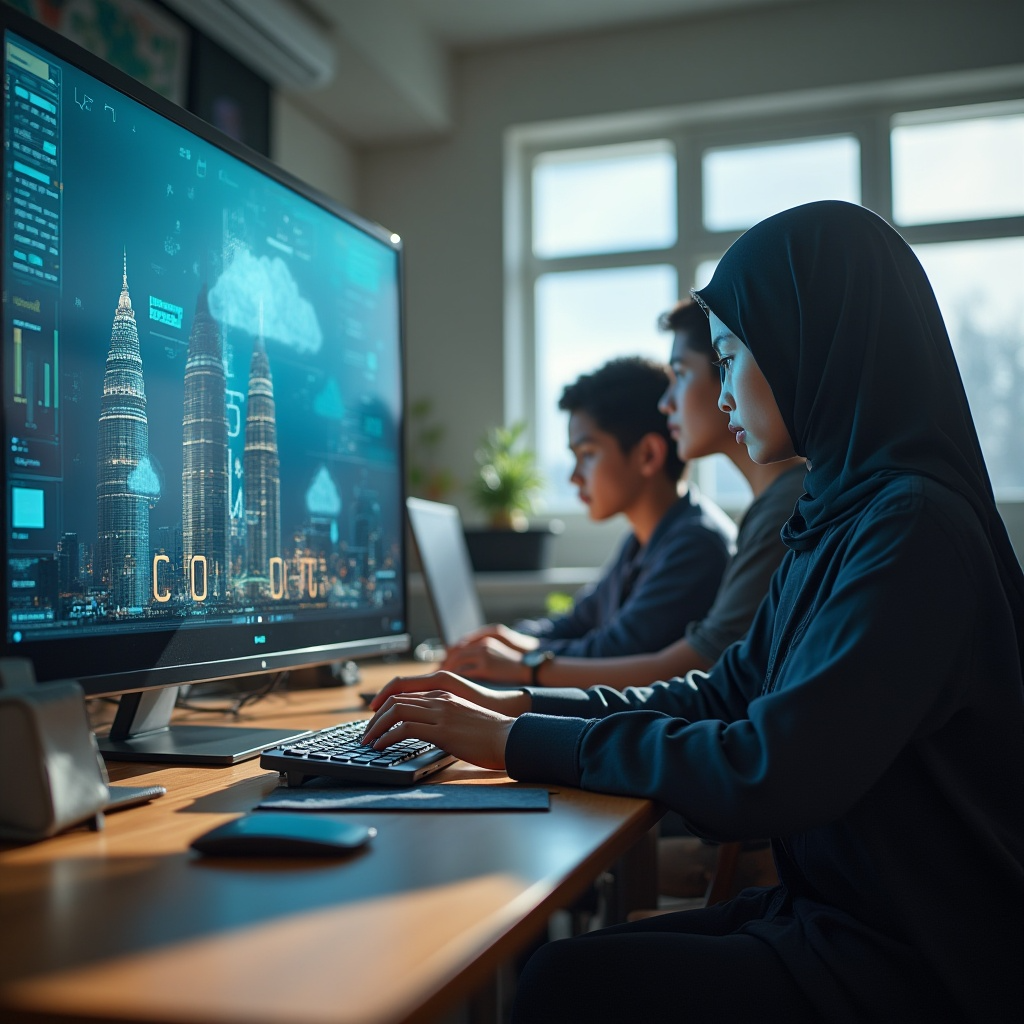
The rapid evolution of today’s digital world presents new challenges for the generation that will shape the nation’s future, while simultaneously transforming the landscape of education, employment, and daily life. Students can no longer rely solely on textbooks, but they must now be proficient in digital technology to stay relevant in this modern era. These skills are not just about technical know-how, but also encompass the creative and productive use of technology in everyday learning.
Digital literacy is no longer merely an advantage, but it has become a fundamental requirement in 21st-century learning. Students who effectively master digital knowledge can quickly access information, conduct independent research, and engage in interactive learning. These capabilities offer a significant advantage in improving academic performance.
Technology not only serves as a medium for delivering knowledge, but it also stimulates students’ intellectual development. Through learning applications such as interactive quizzes, simulation software, and virtual reality tools, students are exposed to diverse scenarios that challenge their thinking. This encourages analytical reasoning, problem-solving, and data-driven decision-making, skills crucial for real-world success.
Early exposure to digital technology has a significant impact on academic performance. Digitally literate students demonstrate higher levels of understanding, improved concentration, and greater willingness to experiment with new methods and approaches in completing tasks. They also show more independence and creativity in adapting to changes in learning styles according to their needs.
Preliminary studies by researchers from a local university reveal that students who consistently use digital learning applications score higher in examinations compared to those relying solely on conventional methods. The study also highlights improvements in communication skills, group collaboration, and time management among digitally proficient students.
Moreover, digital skills empower students to critically assess information, distinguish facts from opinions, and identify credible sources. With these abilities, students are not easily influenced by false information and can form well-founded opinions. This fosters greater confidence and cultivates strong leadership qualities among students.
The Malaysian Ministry of Education has been actively implementing various initiatives to ensure students are equipped with digital skills. These efforts include introducing Computer Science into the secondary school curriculum, training teachers in tech-based instruction, and providing digital facilities to rural schools. Collaborations with the private sector have also expanded access to high-quality digital learning platforms.
Students proficient in digital technology not only achieve better academic results but also perform better in self-directed learning, collaboration, and creativity. They are more prepared to face a digitally driven world and can serve as agents of change within their communities.
However, it needs to be noted that improper use of technology will lead students to engage in inappropriate activities. This requires close supervision, especially by parents, is essential.
Digital and IT skills have now become fundamental to students’ success. In an increasingly interconnected world, digital literacy is not a luxury, but it is a necessity to ensure students not only excel academically, but are also ready to face the challenging and competitive future world.
**The writer is a lecturer at the Faculty of Business, Economics and Social Development (FPEPS), Universiti Malaysia Terengganu.