
Thursday, 22/1/2026
Share This Article :
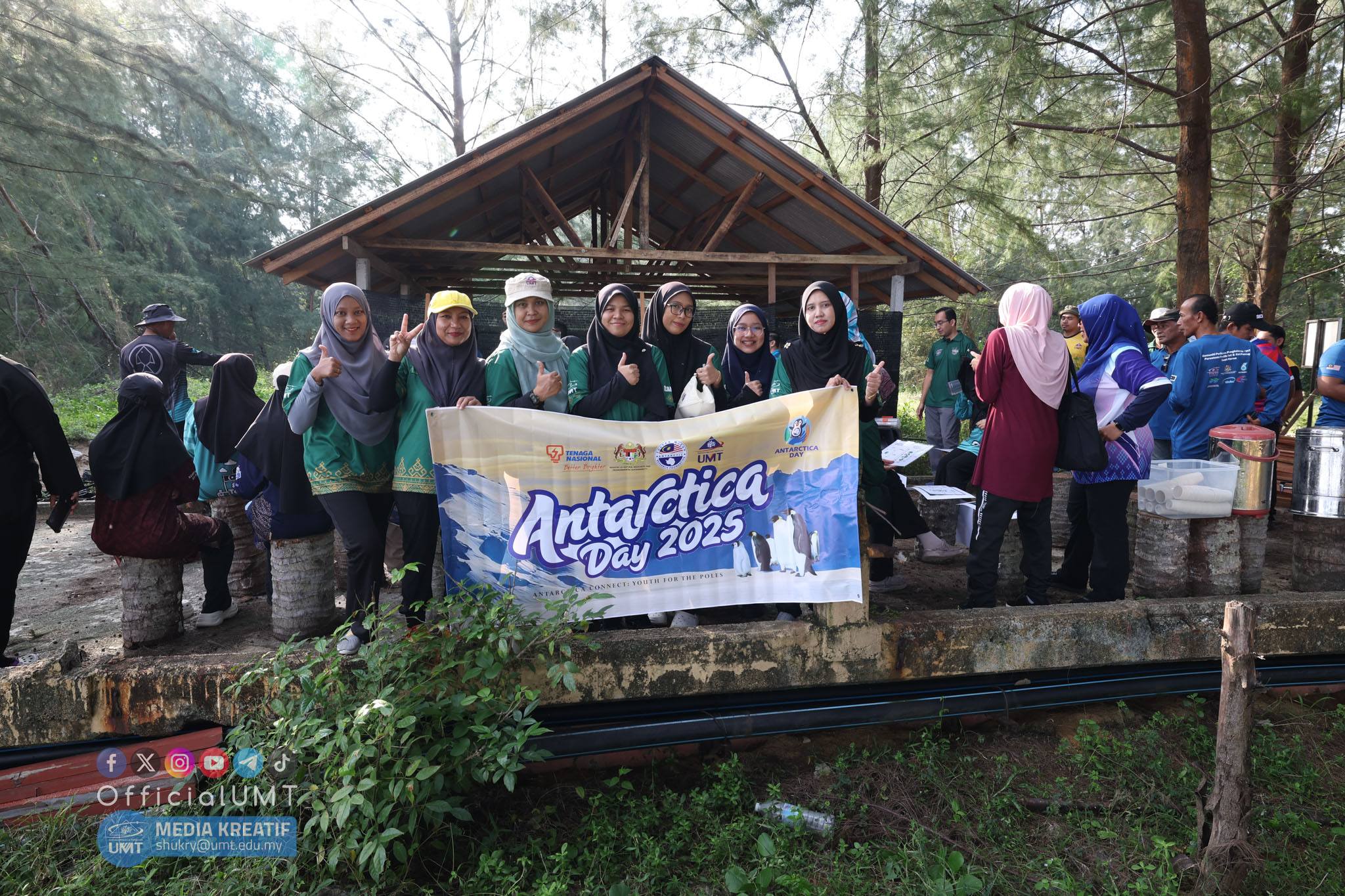
To send a powerful message that climate change has no borders and collective responsibility is essential, Universiti Malaysia Terengganu (UMT) organized the National Antarctica Day 2025 in December, in collaboration with the Sultan Mizan Antarctic Research Foundation (YPASM) and the National Antarctic Research Centre (NARC).
The event featured integrated environmental and awareness activities designed to connect local action with global climate challenges. grouped into three main sub-programmes—Growing Greens for the Land of Ice, Green Footprints, and Antarctica Day Forum—each highlighting the interconnectedness of human activities, coastal ecosystems, and the fragile Antarctic environment.
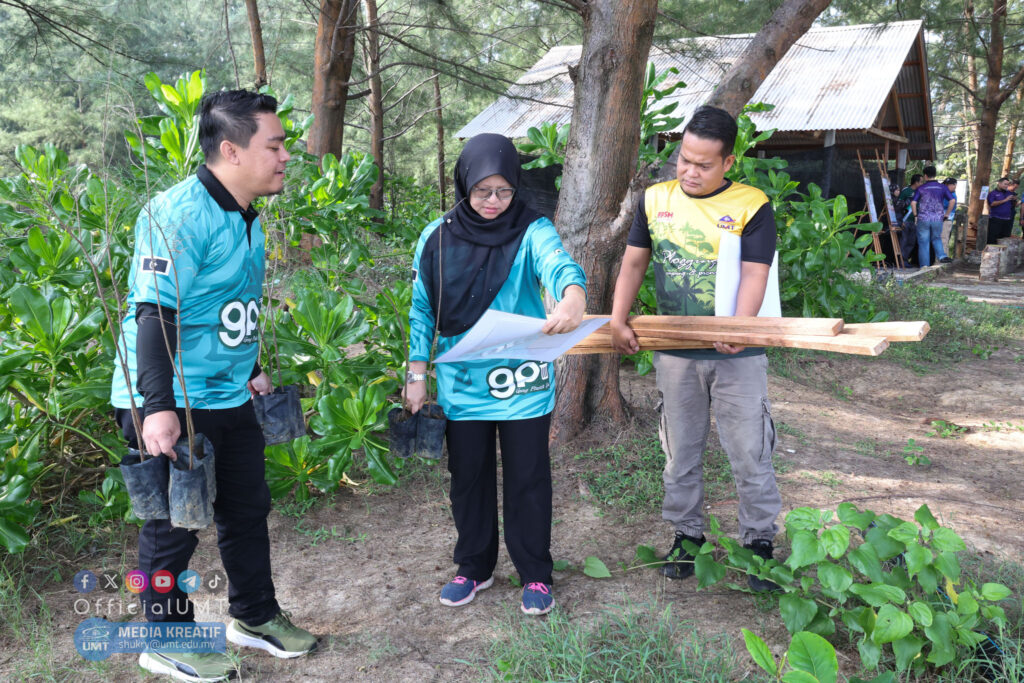
The Growing Greens for the Land of Ice programme took place at UMT beach, where participants planted 50 coastal trees, including Rhu (Casuarina sp.) and Ketapang (Terminalia sp.), species well known for their role in stabilising shorelines, reducing coastal erosion, and enhancing carbon sequestration.
Although the trees were planted in the tropics, the programme symbolically linked local environmental stewardship to the protection of Antarctica. As polar ice melts accelerate due to rising global temperatures, strengthening natural carbon sinks and coastal resilience becomes increasingly vital. This initiative demonstrated how local ecological restoration can contribute meaningfully to global climate mitigation efforts.
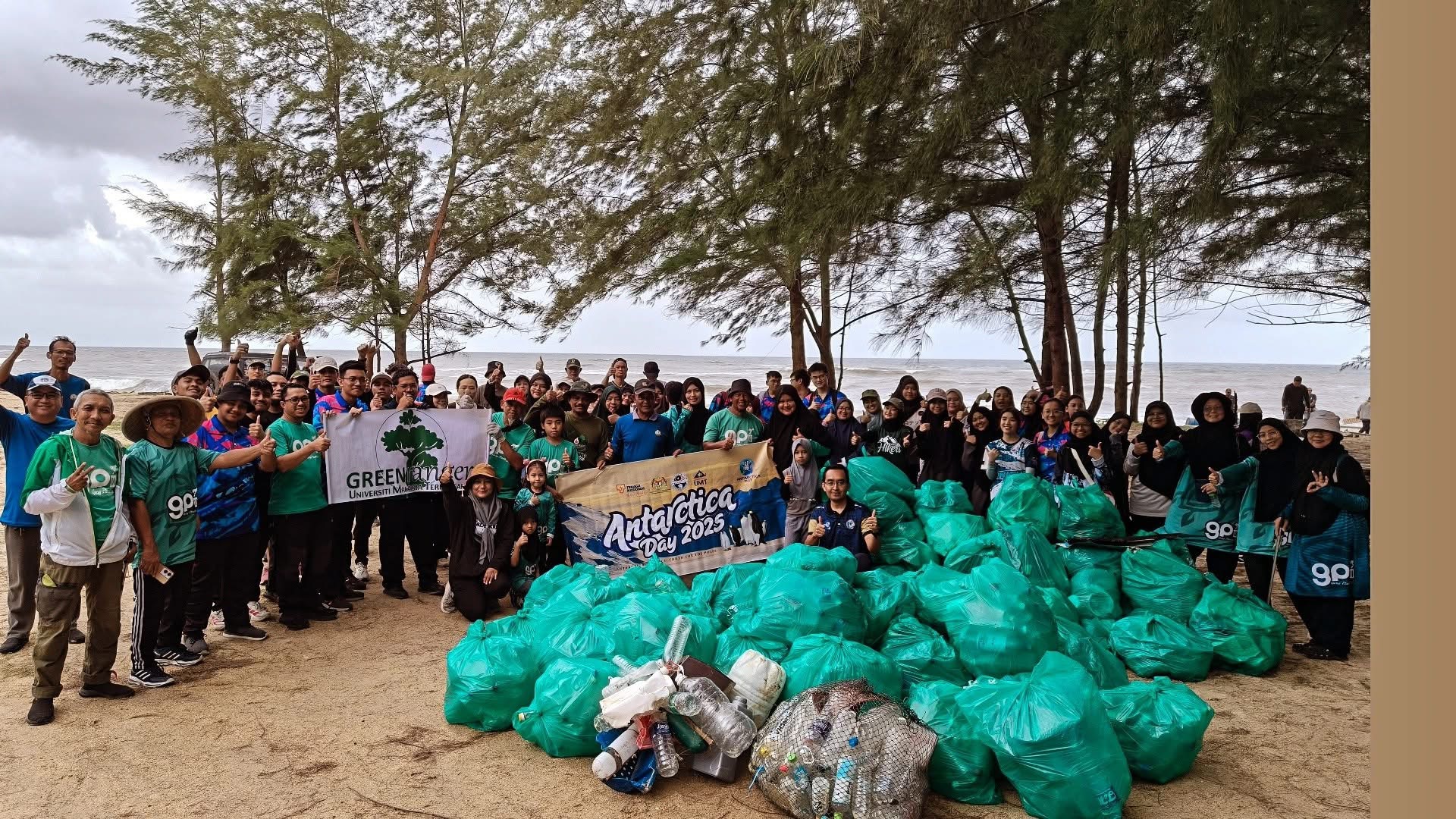
Green Footprints was organised to initiate a beach clean-up at UMT beach, involving 100 participants comprising volunteers from UMT, Kuala Terengganu Municipal Council, Terengganu State Forestry Department, and the NGOs Geng Plastik Ijo and Pengkalan Jie Fisheries Community. Over 265 kilograms of waste were collected, mostly plastic debris.
This activity highlighted the pervasive issue of marine pollution and its widespread impacts, including on polar ecosystems. Plastic waste originating from populated coastlines can travel vast ocean distances, eventually reaching remote regions such as Antarctica. By addressing pollution at its source, the programme reinforced the message that protecting the polar regions begins with responsible actions at home.
The Antarctica Day Forum marked the culmination of the meaningful initiative. The forum provided a platform for academic discourse and public engagement on the importance of Antarctica in regulating the Earth’s climate system. Discussions focused on the role of Antarctic ice in sea-level regulation, global ocean circulation, and climate stability, as well as Malaysia’s growing involvement in polar research through the National Antarctic Research Centre (NARC).
The forum successfully translated complex scientific concepts into accessible knowledge, fostering greater awareness among students and staff about the global implications of polar environmental change.
The holistic approach that combined education, hands-on environmental action, and global environmental narratives made the National Antarctica Day 2025 more impactful.
By organising the event, UMT demonstrated leadership in sustainability, environmental education, and climate advocacy.
By Assoc. Prof. Dr. Wan Mohd Rauhan Wan Hussin, Faculty of Fisheries and Aquaculture Sciences
