
Wednesday, 25/22026
Share This Article :
By Amirul Salam Hasan, Corporate Communications Office
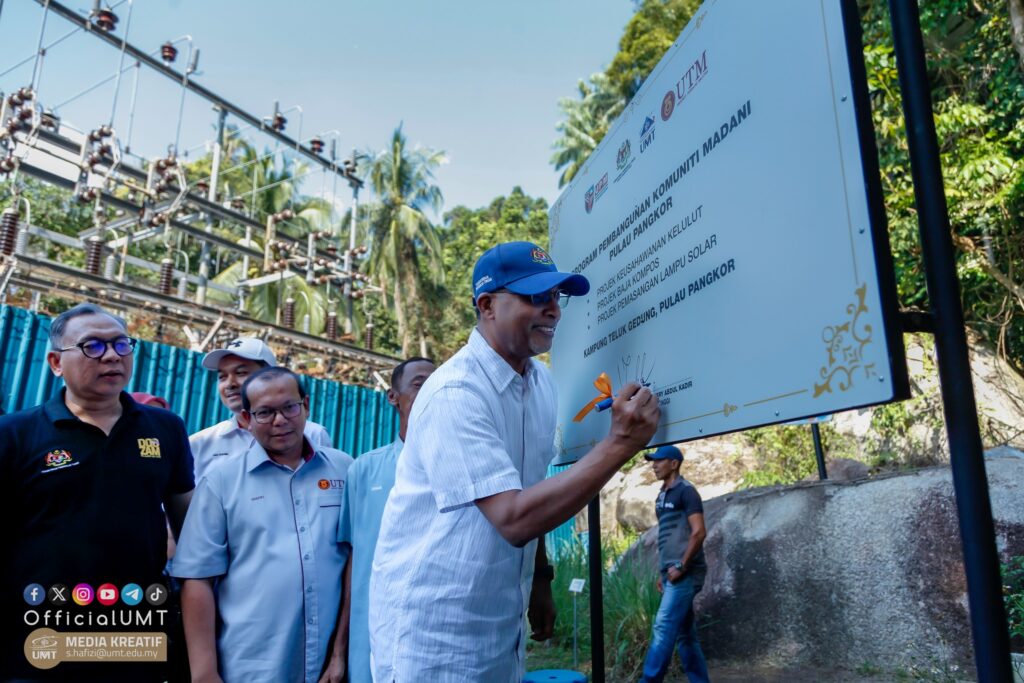
Harnessing its expertise in technology and innovation, Universiti Malaysia Terengganu (UMT) is playing a key role in strengthening the economic potential and competitiveness of the community in Pulau Pangkor through impactful knowledge transfer and community engagement.
Through its involvement in the MADANI Pangkor Community Development Programme, UMT has introduced several initiatives aimed at empowering local residents with practical skills and sustainable economic opportunities. Among the key highlights is a stingless bee farming project that provides guidance and technical support to community members interested in developing a new source of income.
The project reflects the broader aspiration of the Ministry of Higher Education under the leadership of Zambry Abdul Kadir, which encourages universities to contribute directly to community development through research, innovation, and the sharing of academic expertise.
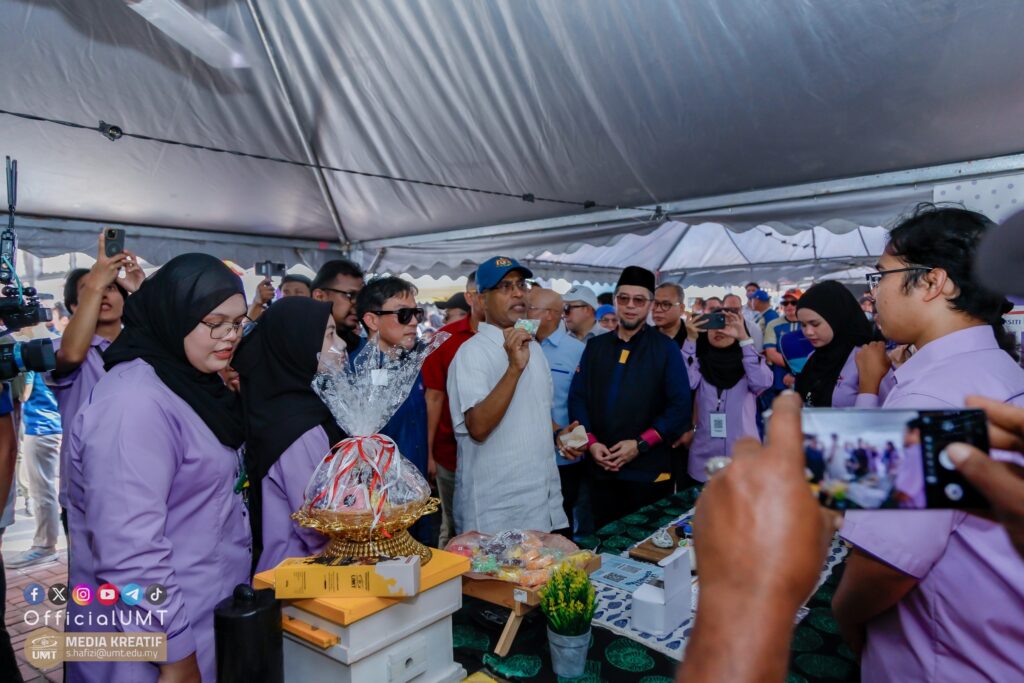
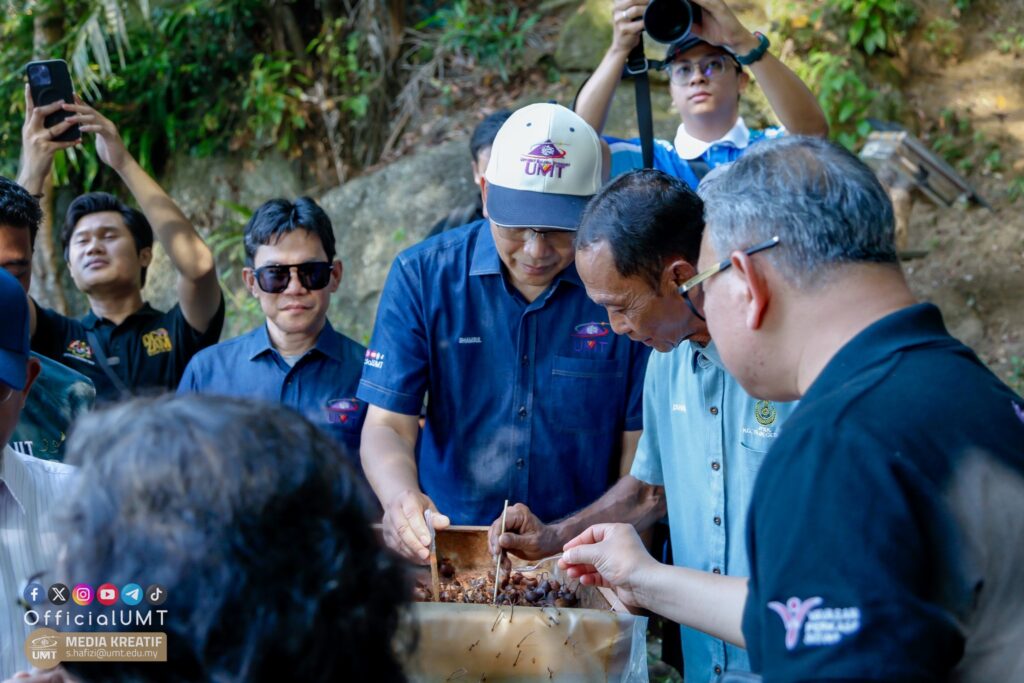
At the programme, UMT researchers and students demonstrated how stingless bee farming can be developed into a viable micro-enterprise for island communities. Participants were introduced to the management of stingless bee colonies, hive preparation, honey harvesting techniques, and basic strategies for product marketing.
According to UMT Vice-Chancellor Mohd Zamri Ibrahim, the university remains committed to ensuring that its academic expertise, technology, and research outputs are translated into real benefits for society.
“UMT consistently ensures that the university’s expertise, technology, and research findings can be directly utilised by the community. This approach not only helps increase community income but also strengthens local competitiveness and economic sustainability,” he said.
Through the project, UMT researchers guided participants on the systematic management of stingless bee colonies and the commercial potential of stingless bee honey, a high-value product that is increasingly sought after in the health and wellness market. With proper quality control and the application of modern techniques, the product also has the potential to reach broader markets.
The initiative also reflects UMT’s emphasis on experiential learning. Students and lecturers actively participated in the programme, working alongside residents to transfer practical knowledge while gaining first-hand exposure to community-based development.
For programme participant Mohd Zulkifli Zaki, 49, the hands-on guidance provided by the university has opened new possibilities for supplementary income.
“I am very grateful to UMT for guiding us directly. Through this project, we learned not only how to manage stingless bee colonies properly but also how to market the honey so that it can generate better returns,” he said.
He expressed hope that similar initiatives by UMT will continue in the future, allowing more residents to improve their livelihoods through stingless bee farming, which is gaining increasing demand in the market.
Through initiatives such as the Pangkor stingless bee project, UMT continues to demonstrate how universities can serve as catalysts for community transformation, bridging academic knowledge with real-world solutions that support sustainable economic growth.
