
Wednesday, 25/22026
Share This Article :
By Engku Nurul Aima Tengku Amri, Corporate Communications Office
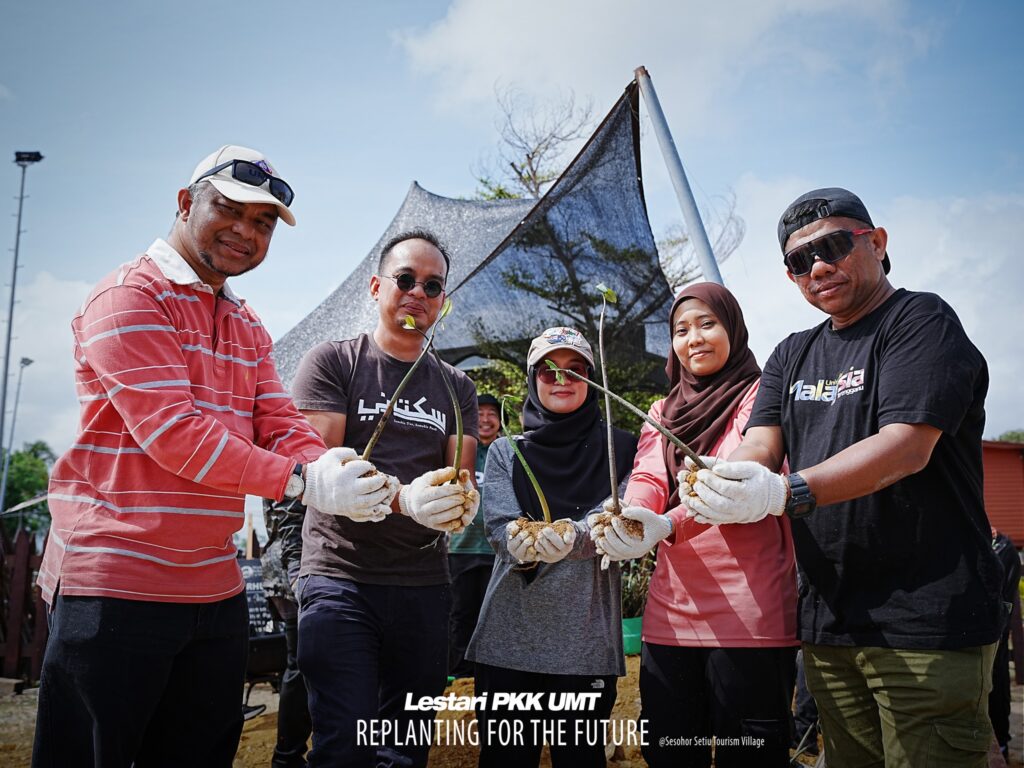
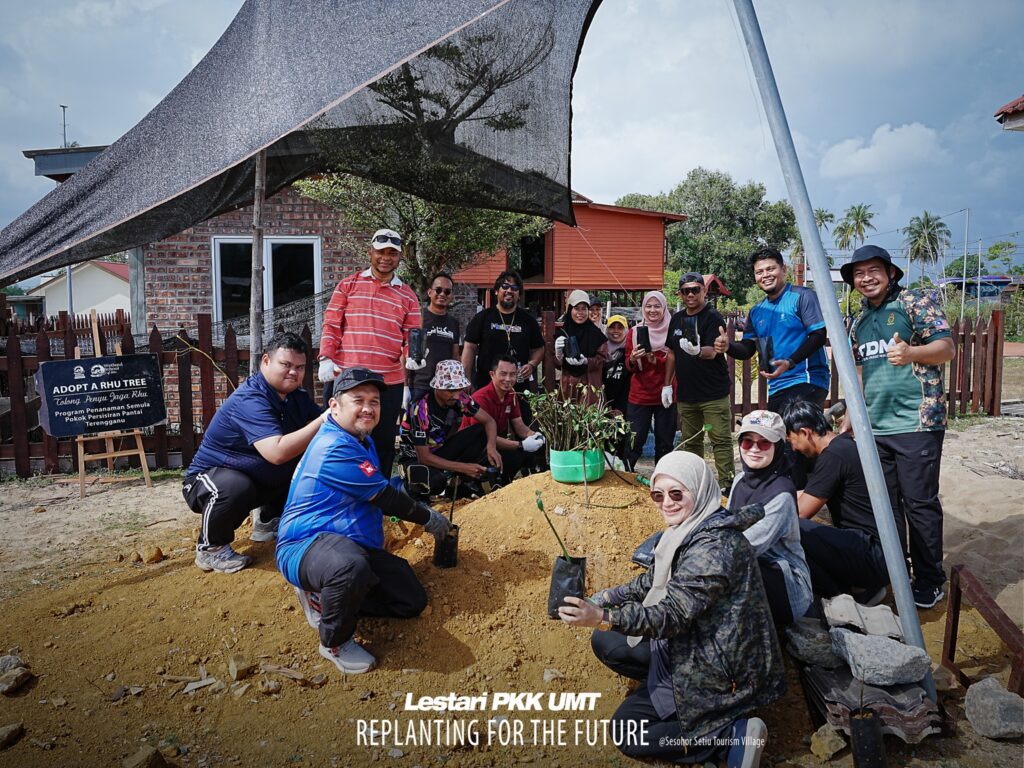
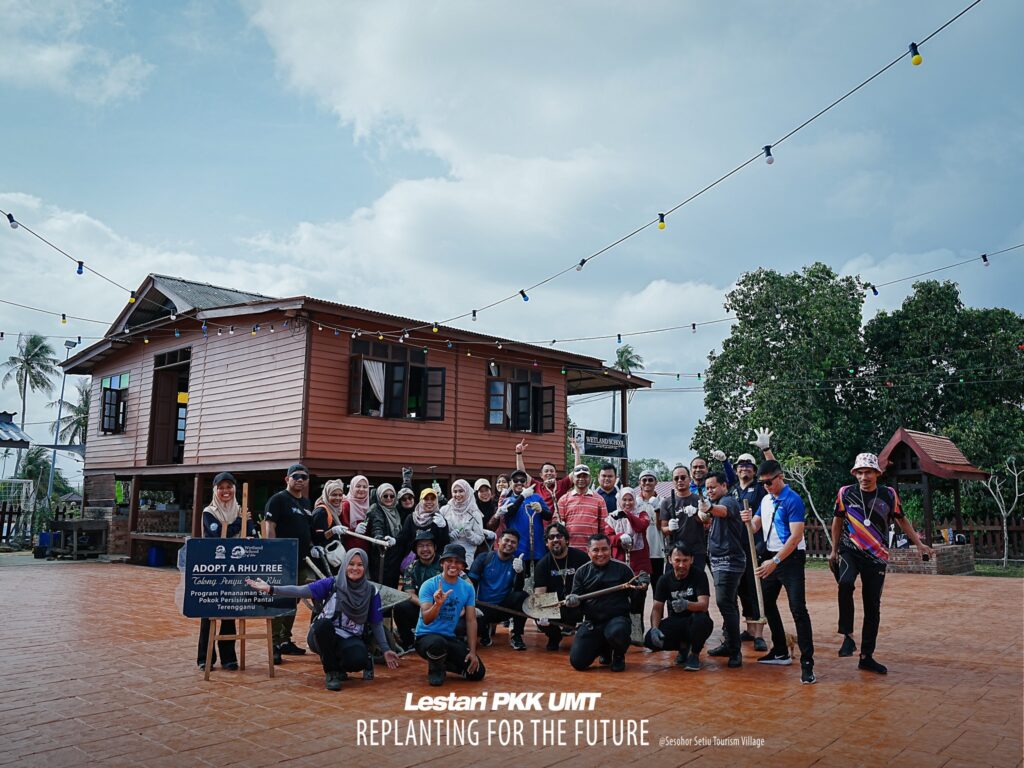
As a display of commitment to environmental sustainability and the Sustainable Development Goals (SDGs), Universiti Malaysia Terengganu (UMT)’s Corporate Communications Office recently teamed up with environmental NGO Ecoswed to organize a special replanting programme.
The initiative known as Replanting for the Future was held at Sesohor Setiu Tourism Village Centre. A total of 30 staff members from the office worked hand in hand with Ecoswed representatives to plant and nurture mangrove saplings at the area. As an NGO, Ecoswed actively promotes coastal ecosystem conservation and community education on the importance of mangrove forests.
Mangrove forests play a vital role as natural barriers that shield coastal areas from storms and powerful waves. They also serve as habitats for various marine species such as fish, crabs and shrimp, thereby supporting the livelihoods of local fishing communities. From a global environmental perspective, mangrove ecosystems have a high carbon absorption capacity, making them significant contributors to efforts in reducing the impacts of climate change.
The initiative not only provided UMT staff with first-hand exposure to the significance of mangrove ecosystems, but also served as a practical platform to contribute to climate change mitigation efforts, biodiversity conservation, and the protection of coastal areas from erosion and strong wave threats.
Corporate Communications Office Director Zukiferee Ibrahim said that staff involvement in such programmes reflects the university community’s strong awareness of social responsibility and the role of higher education institutions in supporting sustainable development.
“The programme is not merely an outdoor activity, but a manifestation of our commitment to supporting global sustainability efforts outlined under the SDGs. As members of a university rooted in marine knowledge and research, we must go into the field and contribute directly to environmental conservation,” he said.
He further emphasised that the participation of the office in environmentally impactful programmes aligns with its role in communicating and promoting the university’s sustainability initiatives to society.
“As the university’s official communication medium, we are not only responsible for disseminating information but must also lead by example in supporting programmes that benefit both the community and the environment. We hope this support will instil continuous awareness among UMT members and the wider public,” he added.
The programme aligns with UMT’s aspiration as a university grounded in ocean and marine sciences, while supporting the Sustainable Development Goals, particularly SDG 13 (Climate Action), SDG 14 (Life Below Water) and SDG 15 (Life on Land).
Through the programme, UMT demonstrates that small but consistent efforts can create a significant impact on environmental sustainability for future generations. The initiative is expected to continue in the future with broader participation from university members and the local community, further strengthening the role of higher education institutions as leaders of change towards a more sustainable world.
