Share This Article :
By Syarifah Noormaisarah Tuan Besar, International Centre
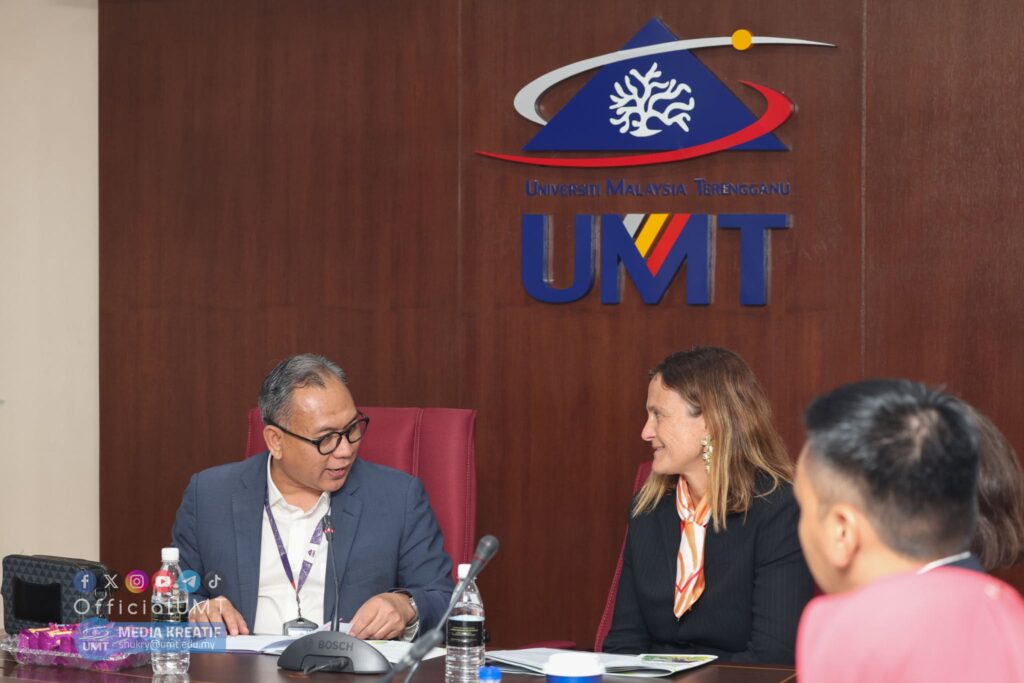
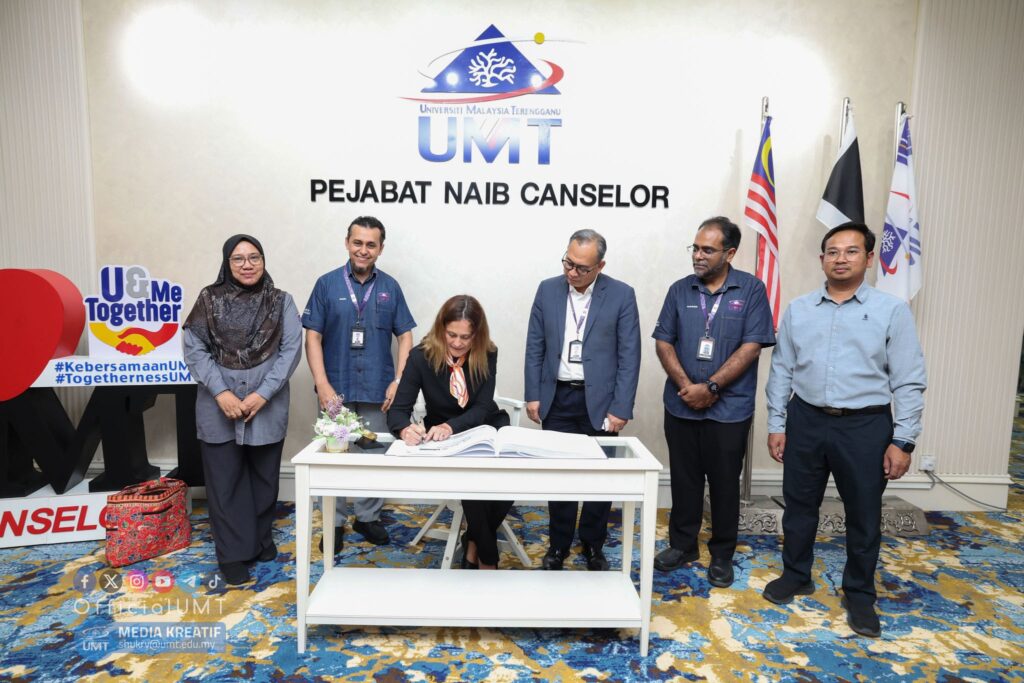
Universiti Malaysia Terengganu (UMT) has strengthened its international academic and research network with Australia following a courtesy visit by representatives of the Australian High Commission on 6 June 2026, paving the way for expanded collaboration in marine science, the blue economy, climate change, and maritime research.
The engagement underscored growing interest in leveraging UMT’s expertise as Malaysia’s leading marine-focused university to address global environmental challenges through strategic international partnerships. Both parties explored opportunities to enhance research cooperation, academic mobility, and knowledge exchange between Malaysian and Australian institutions.
The Australian delegation was led by Her Excellency Danielle Heinecke, High Commissioner of Australia, accompanied by Ms Imogen D’Souza, Second Secretary, and Mr Nik Mohd Yusof, Political Research Officer. Their visit reflected Australia’s continued commitment to strengthening ties with Malaysian higher education institutions, particularly in areas related to sustainability, marine resources, and the blue economy.
During discussions, the High Commission highlighted UMT as a promising partner for future collaboration, citing the university’s established strengths in marine science, biodiversity, climate change, renewable energy, blue economy development, and maritime studies. Maritime research emerged as a particularly strong area of mutual interest, given the shared priorities of both countries in ensuring sustainable ocean governance and marine conservation.
UMT also expressed its commitment to expanding collaborative initiatives with Australian institutions, particularly in ocean-related research. Areas identified for potential cooperation include marine plastic pollution, sustainable ocean management, and capacity-building programmes that promote the exchange of researchers and students.
Such initiatives are expected to strengthen joint research output while providing valuable opportunities for academic and cultural exchange. They also align with broader efforts to develop innovative solutions to pressing environmental issues affecting marine ecosystems and coastal communities across the region.
The discussion further explored opportunities to enhance existing and future collaborations with James Cook University, a renowned Australian institution recognised for its expertise in marine and tropical research. Both parties acknowledged the potential for expanding joint research projects, student mobility programmes, and academic partnerships that would contribute to regional and global sustainability goals.
As a university with a strong focus on marine and coastal studies, UMT continues to play an important role in advancing scientific knowledge and fostering international cooperation in ocean-related fields. The engagement with the Australian High Commission reinforces the university’s growing international profile and highlights its capacity to contribute meaningfully to global research networks.
The visit marks another important milestone in deepening Malaysia–Australia academic relations while positioning UMT as a regional hub for marine and coastal research dedicated to addressing shared environmental challenges through collaboration and innovation.