By Ts. Dr. Thirukanthan C.S. (ICAMB)
Universiti Malaysia Terengganu (UMT) recently hosted the “Partnerships to Practice, an Artemia Workshop,” bringing together leading global and regional organisations to strengthen the role of Artemia in sustainable aquaculture development. The selection of UMT as host reflects the university’s growing position as a regional centre for marine science, aquatic resources and Blue Economy research.
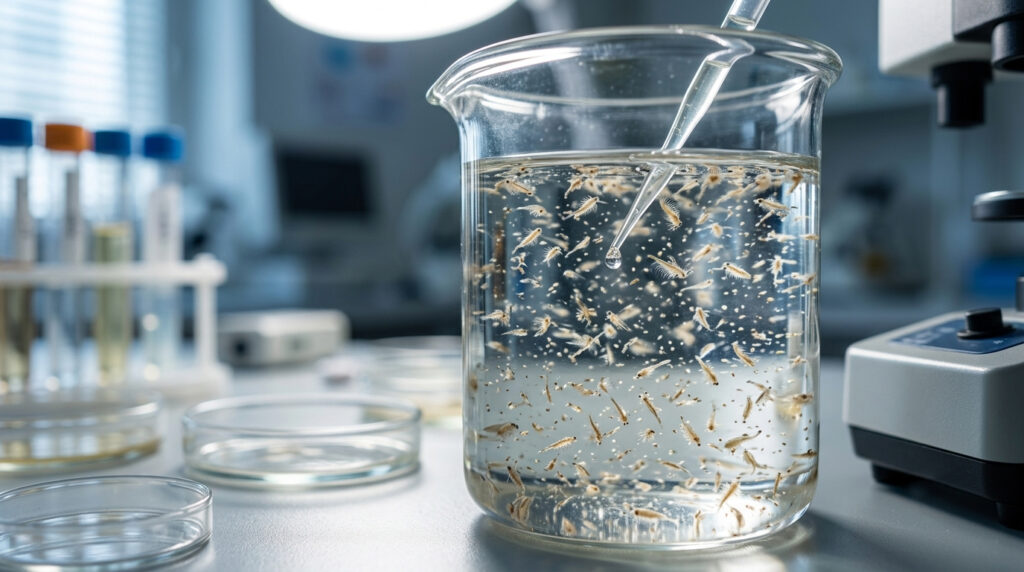
Artemia is an important live feed used in global aquaculture, especially during the early life stages of many cultured aquatic species. Its reliability, nutritional value, and suitability for hatchery operations make it a critical component in aquaculture production.
At UMT, Artemia research has been developed for years through studies on production technology, nutrition, hatchery management, selective breeding, and sustainable biomass production using locally available agricultural by-products.
UMT’s contribution to Artemia research has been strengthened through the establishment of the UMT Artemia Production Hatchery and the implementation of the Artemia Translational Research Grant awarded by the Ministry of Higher Education. These initiatives have expanded UMT’s research infrastructure, enhanced production capability and created training opportunities for researchers, students and industry stakeholders.
Another important feature was the long-standing collaboration between UMT and Ghent University, Belgium, particularly through Emeritus Prof. Dr. Patrick Sorgeloos, a globally respected aquaculture scientist. His contribution to mentoring, research collaboration, and human capital development has helped shape UMT’s Artemia research ecosystem over almost a decade.
The workshop convened representatives from the Food and Agriculture Organization of the United Nations (FAO), Ghent University, Belgium, the Network of Aquaculture Centres in Asia-Pacific (NACA), the Department of Fisheries Malaysia, industry partners, researchers and aquaculture practitioners from Malaysia and abroad.
Discussions centred on scientific advancement, practical adoption, capacity building, and industry relevance, in response to aquaculture systems facing increasing pressure to become more efficient, resilient and environmentally responsible.
The workshop also highlighted the leadership of Prof. Dr. Yeong Yik Sung, Director of the Institute of Climate Adaptation and Marine Biotechnology (ICAMB), whose work in Artemia research has brought wider recognition to UMT and Malaysia. The recent recognition of ICAMB as a Higher Institution Centre of Excellence (HICoE), effective January 2026, further strengthens UMT’s role in advancing marine biotechnology and sustainable aquaculture innovation.
The workshop also aligned with UMT’s broader commitment to the Blue Economy, green technology and renewable energy. Future aquaculture systems will need to integrate circular bioeconomy approaches, efficient resource use and lower-impact production methods. Artemia research offers a practical entry point into this transition, linking live feed technology with sustainability, food security and industry competitiveness.
Through this workshop, UMT reaffirmed its commitment to building meaningful international partnerships, strengthening regional expertise and supporting aquaculture systems in Malaysia, ASEAN and beyond. The programme marked an important step in turning scientific collaboration into practical value for industry, society and future generations.