By Assoc. Prof. Dr. Tan Chun Hong, Faculty of Science and Marine Environment
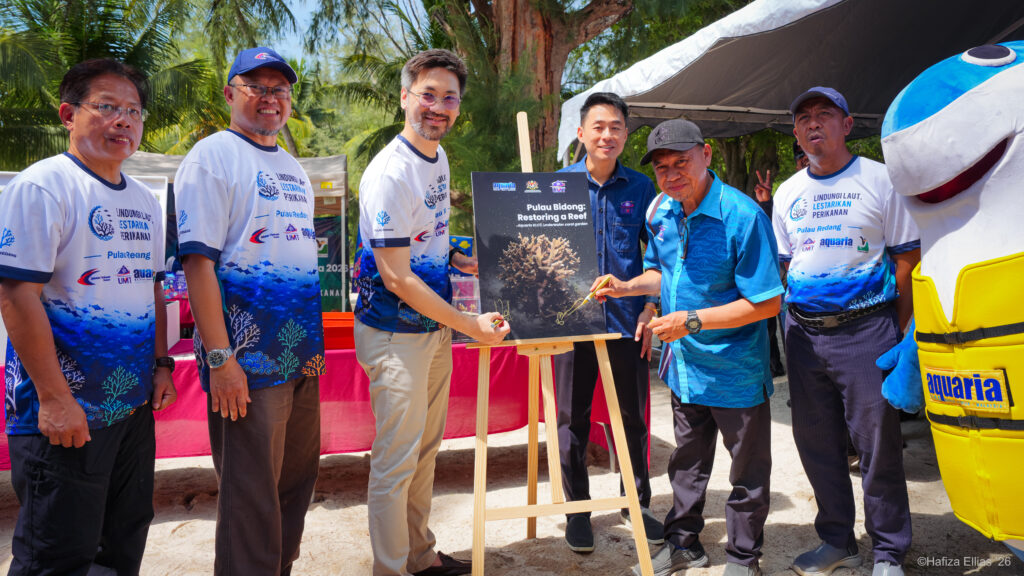
Reinforcing its role as one of Malaysia’s leading institutions in marine conservation research, Universiti Malaysia Terengganu (UMT) has recently launched a new coral restoration initiative at Pulau Redang, one of Malaysia’s most ecologically significant Marine Park areas.
The initiative is a strategic collaboration between UMT, the Department of Fisheries (DOF) Malaysia, and Aquaria KLCC (Aquawalk Sdn. Bhd.), bringing together scientific expertise, government support, and industry commitment to strengthen the resilience of Malaysia’s coral reef ecosystems.
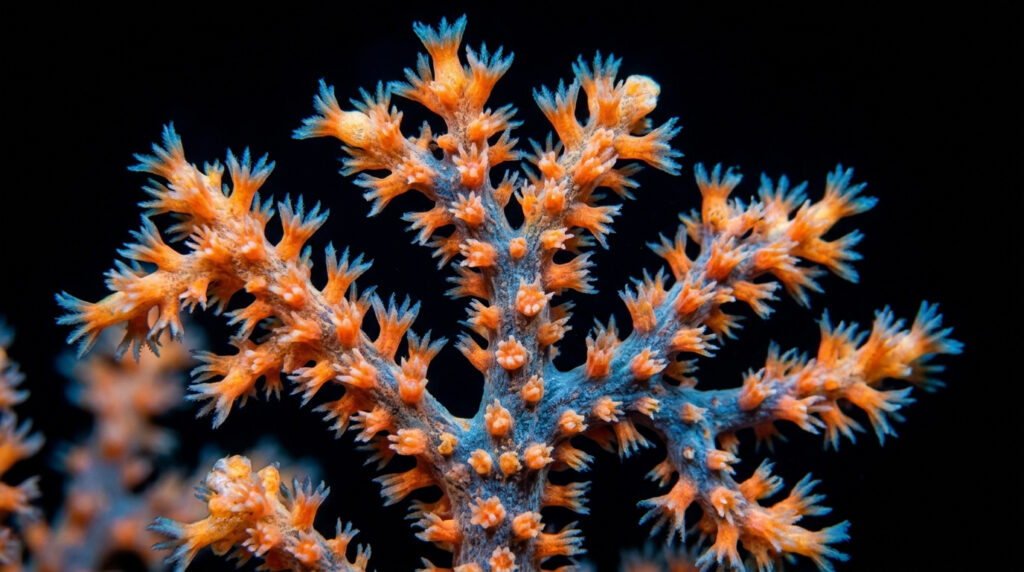
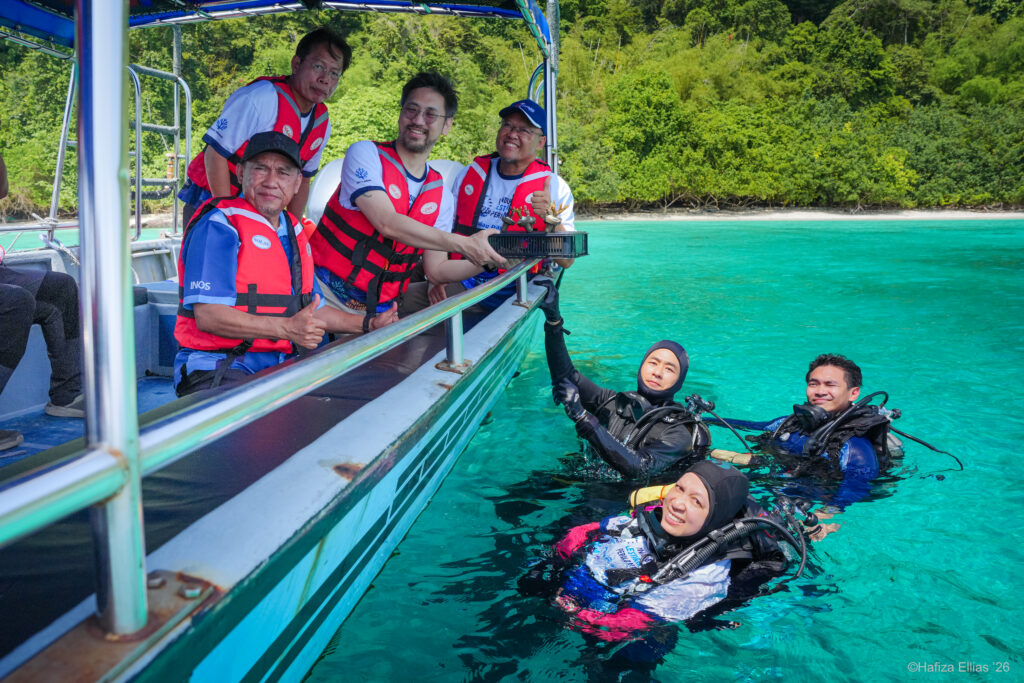
Under the new initiative, UMT researchers will oversee the restoration of 500 coral nubbins, ensuring that all restoration activities are implemented using science-based methodologies supported by long-term ecological monitoring.
Led by Associate Professor Dr. Tan Chun Hong (James) from the Faculty of Science and Marine Environment, the project applies the One-For-All (OFA) coral restoration methodology, an innovative restoration approach developed through years of research and field implementation. The OFA system is designed to stabilise loose coral rubble, enhance natural coral recruitment, improve coral survivorship, and allow restoration structures to be relocated when necessary, such as during mass coral bleaching events.
The initiative is expected to achieve success similar to UMT’s earlier coral restoration programme at Pulau Bidong, which was carried out in collaboration with Aquaria KLCC following the severe destruction caused by Tropical Storm Pabuk in 2019. The shallow reefs surrounding Pulau Bidong experienced more than 80% coral mortality, leaving behind unstable coral rubble that severely limited natural reef recovery.
Since 2022, UMT researchers have successfully restored approximately 800 m² of degraded reef habitat by transplanting more than 1,000 coral fragments using the OFA methodology. Mature coral colonies capable of natural spawning have begun to develop, indicating that the restored reefs have begun to function as new sources of coral larvae, contributing to the natural recovery of surrounding reef ecosystems.
The recovering reef has also shown a remarkable increase in fish abundance and species diversity, transforming what was once a barren coral rubble field into a thriving marine habitat. The return of ecologically important species, including the green sea turtle (Chelonia mydas) and the hawksbill turtle (Eretmochelys imbricata), further demonstrates the restoration of habitat quality and the ecosystem’s growing ecological resilience.
The coral restoration programme represents another milestone in UMT’s long-standing commitment to translating scientific research into practical conservation solutions. The methodology used reflects UMT’s continuous efforts to develop practical, science-driven solutions that address the increasing challenges faced by coral reef ecosystems under climate change and other human-induced pressures.
Through these initiatives, UMT continues to demonstrate how research, innovation, and strategic collaboration can contribute meaningfully to the conservation and sustainable management of Malaysia’s coral reef ecosystems while supporting the nation’s commitment towards biodiversity conservation and sustainable ocean management for future generations.