By Amirul Salam Hasan, Corporate Communication Office
Two researchers from Universiti Malaysia Terengganu (UMT) have successfully secured an international research grant worth £714,000 (approximately RM3.9 million) from the United Kingdom (UK) Government to implement a mangrove ecosystem restoration project in Malaysia that integrates environmental sustainability with the well-being of coastal communities.
The grant forms part of a total funding allocation of RM13.5 million provided by the UK Government through the Global Centre on Biodiversity for Climate (GCBC) under the UK Department for Environment, Food and Rural Affairs (DEFRA).
The project titled REVIVE: Just Restoration and Equitable Value Chains for Inclusive, Viable Mangrove Ecosystems: The Case of Malaysia is led by the University of Manchester and will be implemented from July 2026 to June 2029.
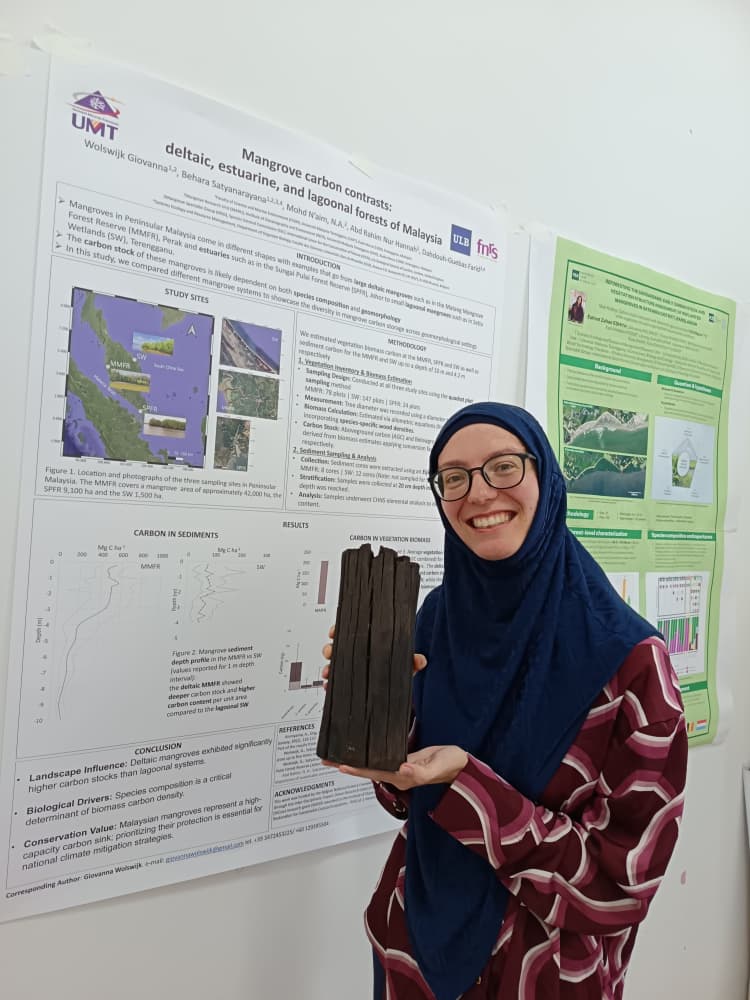
Associate Professor Dr Behara Satyanarayana from the Institute of Oceanography and Environment (INOS) and Dr Giovanna Wolswijk from the Faculty of Marine Science and Environment will be representing UMT in the project’s international research team.
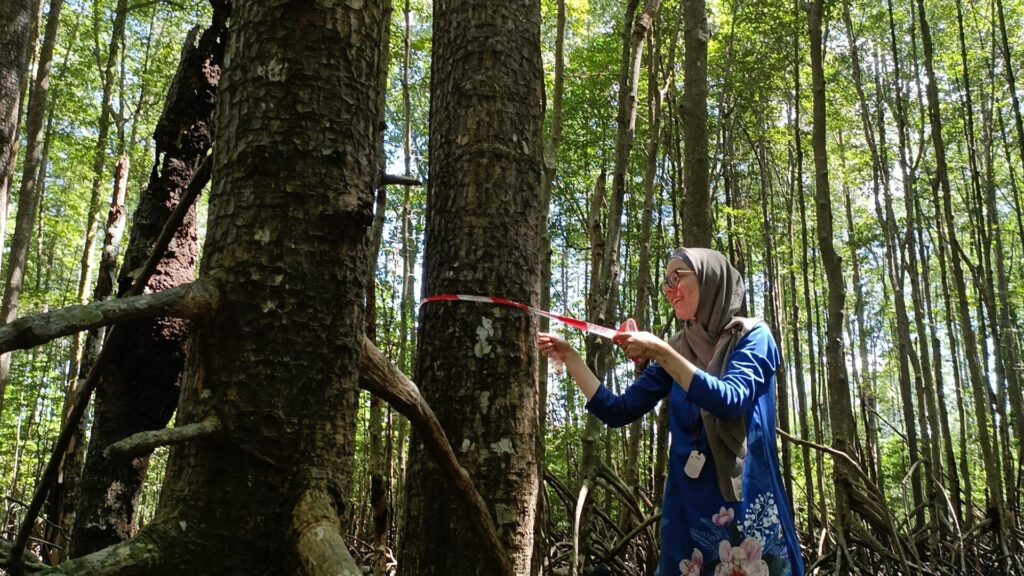
According to Dr Giovanna, REVIVE focuses on three major mangrove areas: Matang Mangrove Forest Reserve in Perak; Sungai Acheh and Sungai Chenaam in Penang; and Setiu Wetland State Park in Terengganu.
She said the project aims to develop mangrove restoration approaches that not only restore ecosystem functions but also enhance the economic well-being of local communities through fairer and more sustainable value chains.
“I am grateful for this grant,” she said. “This research project will be carried out with a team comprising nine research partners from Universiti Kebangsaan Malaysia, the University of Manchester, the University of Warwick, Cardiff University and the Penang Inshore Fishermen Welfare Association (PIFWA).”
She said mangrove ecosystem restoration must be implemented holistically by integrating scientific approaches, community engagement and inclusive governance to ensure that ecosystem benefits are shared fairly and sustainably.
“Mangroves are not merely natural barriers that protect coastlines and store blue carbon; they are also a source of livelihood for thousands of coastal communities.
“Through REVIVE, we aim to ensure that restoration efforts benefit the environment while simultaneously empowering communities through more sustainable economic opportunities and fairer value chains,” she said.
She added that the research will also encompass blue carbon mapping, ecosystem health assessments, habitat restoration interventions, as well as investigations into mangrove degradation, sediment deposition and the sustainability of industries dependent on mangrove resources.
She said community involvement as strategic partners throughout every phase of the research is a crucial element in ensuring that restoration and conservation efforts can be sustained over the long term.
The REVIVE project is expected to contribute to the development of a mangrove ecosystem restoration model that can serve as a reference at both national and international levels, particularly in addressing climate change, conserving biodiversity and strengthening the well-being of coastal communities.
The achievement further strengthens UMT’s position as an institution at the forefront of marine and sustainability research, while supporting the United Nations Sustainable Development Goals (SDGs), particularly SDG 13 (Climate Action), SDG 14 (Life Below Water), SDG 15 (Life on Land) and SDG 17 (Partnerships for the Goals).
Meanwhile, UMT Vice-Chancellor, Professor Ir. Ts. Dr Mohd Zamri Ibrahim, congratulated both researchers and described the success in securing the international grant as global recognition of UMT’s research expertise.
“This demonstrates that UMT is capable of being at the forefront of global research in marine sustainability and will continue to play an important role in efforts to maintain the sustainability of ecosystems,” he said.
The REVIVE project also emphasises economic justice and equitable market access for coastal communities, in line with the goal of mangrove ecosystem restoration that not only protects coastal areas but also generates inclusive social and economic benefits.