
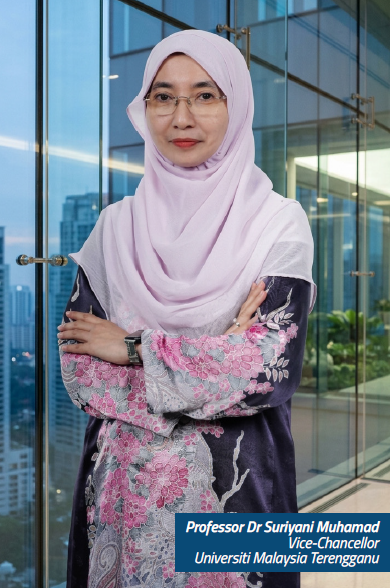
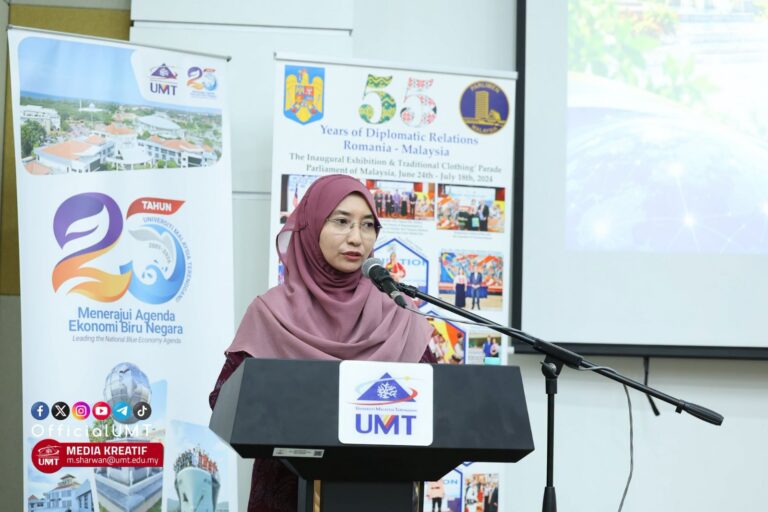
Stewarding Universiti Malaysia Terengganu (UMT) as it approaches its 25th anniversary is a significant responsibility that requires vision, commitment, and the collective efforts of its entire community. UMT has built distinctive strengths in marine and maritime fields. Our responsibility now is to translate these strengths into more meaningful contributions to the nation, particularly through the Blue Economy agenda.
To me, the Blue Economy is not merely about harnessing the sea as an economic resource. It also involves applying knowledge, technology, and innovation to strengthen food security, protect the environment and improve societal well-being. UMT must leverage its expertise to develop relevant, high-impact solutions.
I want UMT to become a national reference point for Blue Economy-based solutions. Our expertise in marine science, aquaculture, fisheries, biodiversity, and climate change must be further strengthened through research that not only advances knowledge but also meets the needs of industry, government and society.
Research success should not be measured solely by academic achievements. Its value also lies in the benefits it delivers, including improving industrial productivity, strengthening food security, conserving marine ecosystems and supporting communities that depend on marine resources.
In this regard, strategic collaborations with industry, government agencies, and international partners must be expanded to strengthen knowledge sharing, technology transfer, and the commercialisation of research outcomes. This approach will enable UMT to develop more practical solutions that address real-world needs.
The Blue Economy agenda requires knowledgeable, skilled human capital equipped to navigate change.
UMT graduates must not only master their respective fields of study but be able to think critically, solve problems and adapt to technological advancements and evolving industry needs.
The Blue Economy should also be viewed as a cross-disciplinary agenda that connects marine science with economics, digitalisation, entrepreneurship, public policy and community development. This approach creates opportunities for more comprehensive solutions and new career pathways for graduates.
University-industry engagement must be strengthened from the outset of students’ academic journeys through practical experience, exposure to real-world challenges, and collaboration with industry players. This will help students understand how knowledge can be translated into value, innovation and meaningful societal impact.
A clear direction can only be realised when the entire UMT community moves forward together. The university’s strength lies in its academic expertise, the commitment of its staff, the potential of its students and its networks across industry, government and society.
As Vice-Chancellor, I want to foster a work culture that encourages collaboration, openness to new ideas, and a commitment to continuous improvement. We must be willing to reassess existing approaches, identify areas for improvement, and ensure that every initiative delivers tangible outcomes.
As UMT enters its 25th year, it has a strong foundation on which to build its future. Past achievements should serve as a springboard for further progress, not a reason for complacency.
UMT will continue strengthening its position as a centre of marine and maritime knowledge and expertise, while serving as a strategic partner to the nation in advancing an innovative, inclusive and sustainable Blue Economy.
Stewarding UMT is not merely about elevating the university’s standing, but about ensuring that every strength we possess is translated into greater benefits. With unity, commitment and a clear sense of direction, I am confident that UMT can continue to contribute to national development, societal well-being and the sustainability of natural resources for future generations.
“To me, university excellence is not simply about rankings or recognition, but also about the ability to deliver benefits that people can genuinely experience.”