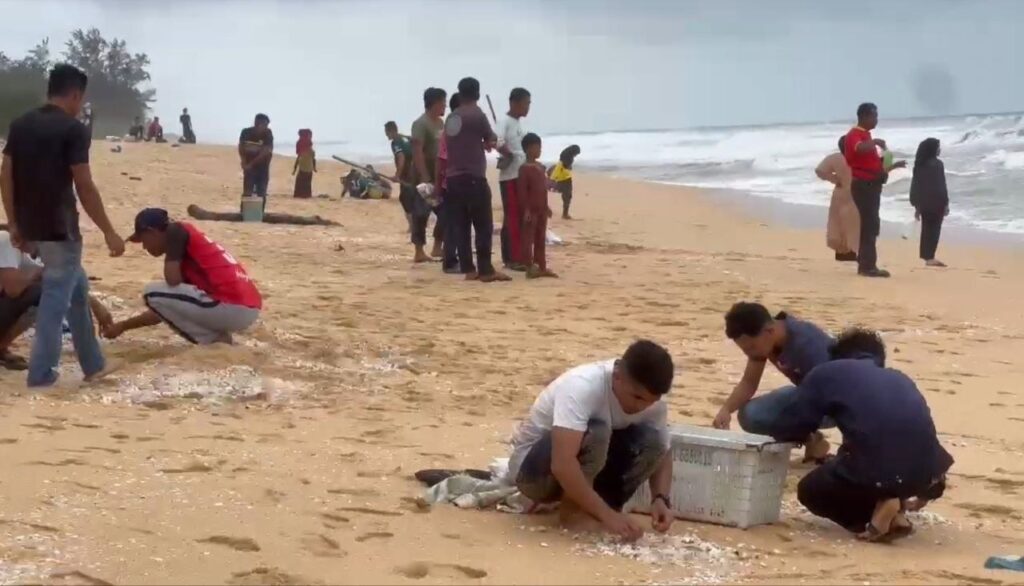
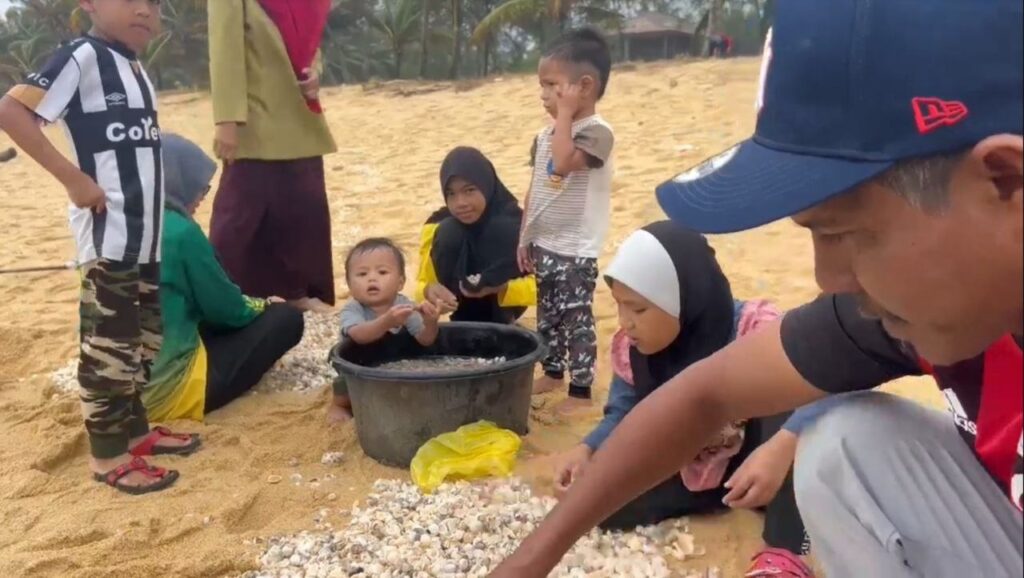
Each time a northeast monsoon season arrives, Terengganu beaches are filled with cockles washed ashore, drawing many visitors to the sites. This season, strong winds and geographical structures of the beaches have caused cockles to be washed ashore.
The scene may look extraordinary, but it is a normal phenomenon that should not be worried about.
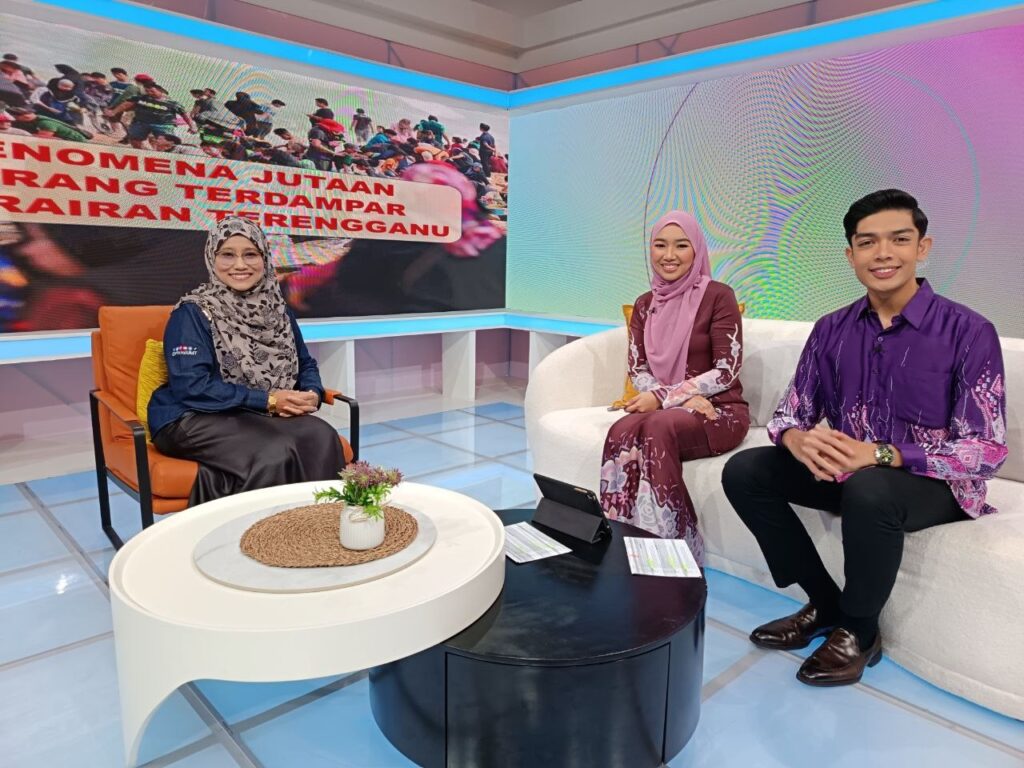
According to Dr. Roslizawati Ab Lah, lecturer with the Faculty of Fisheries and Food Science, Universiti Malaysia Terengganu (UMT), these cockles are safe to eat.
She explained that the phenomenon is not a sign that something terrible is going to happen, but it is part of the natural process that occurs almost every year during the monsoon season.
“The process of cockles getting washed ashore is closely related to the beaches’ geographical structures, strength of waves, and wind direction and speed during the northeast monsoon season. Strong winds and big waves carry the cockles ashore.
For the locals and visitors who enjoy seafood, this phenomenon gives them the opportunity to collect these cockles washed ashore, but there are several things to pay attention to. These cockles may have been exposed to bacteria or water pollution, so it is important to ensure that these cockles are cleaned properly before they are cooked.
In addition, the phenomenon reflects the important role of the ocean and coastal ecosystem in maintaining nature’s balance. The scene of cockles washed ashore should not be feared, as it is a natural process that occurs due to the changes in the weather condition and the environment.
So, to those asking whether it is safe to eat these cockles, Dr. Roslizawati said they can be safely eaten as long as they are cooked properly. Do not be scared of the phenomenon, but enjoy Terengganu’s unique nature that provides a means of livelihood.
Knowing the truth about this phenomenon should be a relief to those wishing to enjoy fresh cockles from Terengganu beaches.