

Monday, 1/7/2024
Share This Article :
The relationship between living organisms and the natural environment in forming an ecosystem is complex network with both relying on one another. Each species in an ecosystem plays a specific role in contributing to the function of the overall ecosystem. Conservation of a marine ecosystem is a critical measure in ensuring economic stability and environmental sustainability.
However, issues on marine resource sustainability provide a significant impact towards stakeholders that rely on sea produce as the main source of income, such as the fishermen. The amount of catch made each day determines the economic level of the group.
Among sea produce caught by the fishermen are the flower crabs. These marine lives are one of the main sources of income for the coastal fishermen.
Excessive capturing and habitat destruction will also lead to reduced flower crab population in their natural habitats. Therefore, flower crab seed release can help increase flower crab population, ensuring the fishermen will continue to have sufficient catch to sustain their lives.
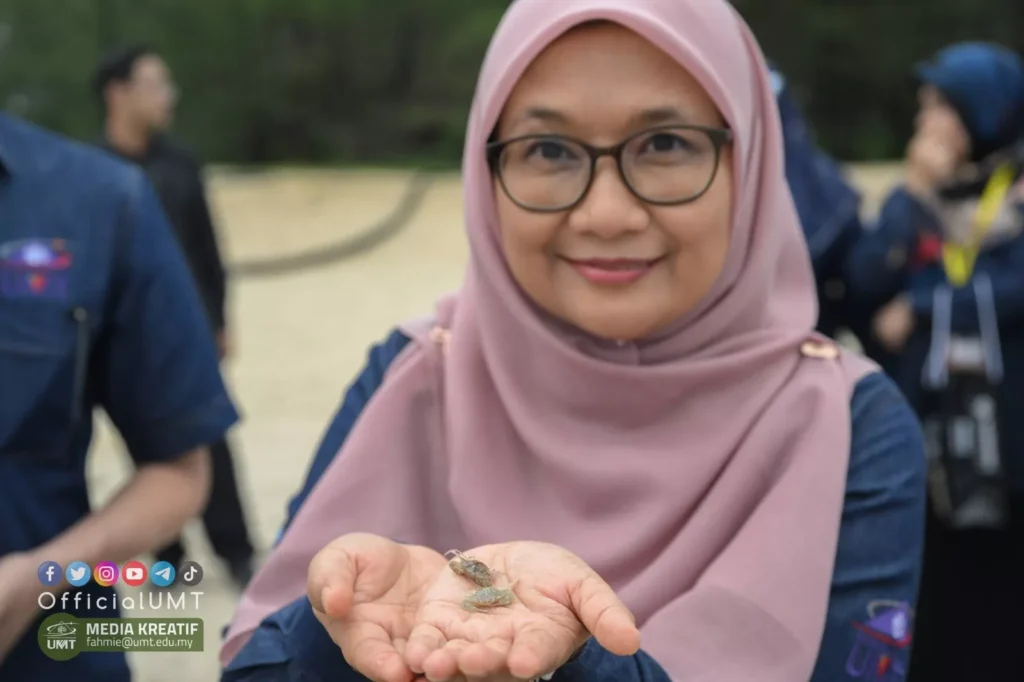
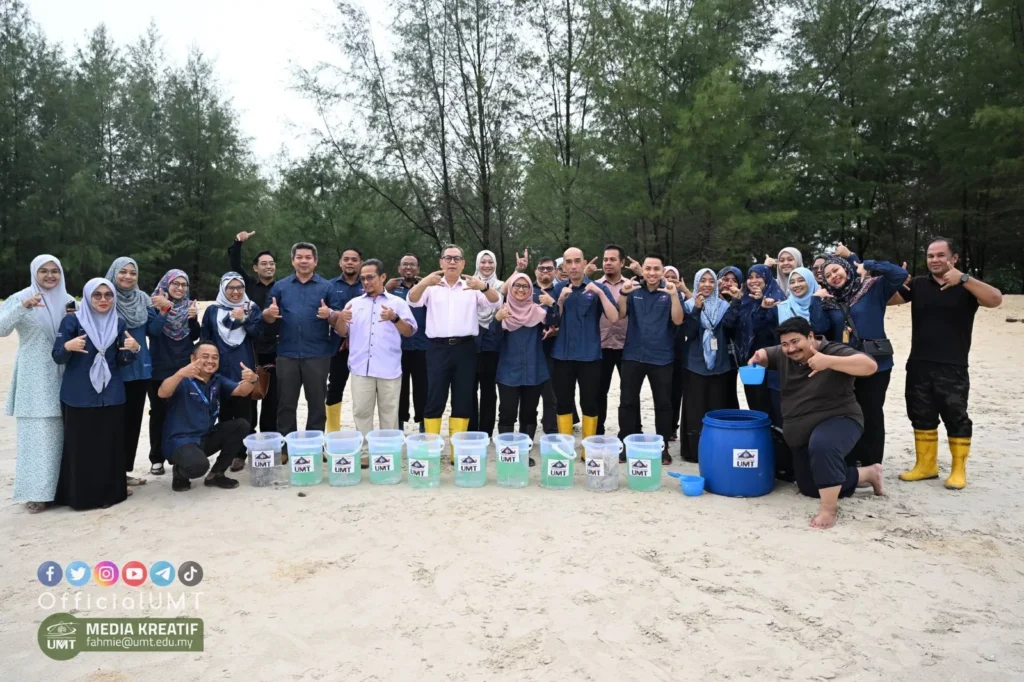
All kinds of initiatives have been taken to strike a balance between human needs and environmental sustainability. For example, Universiti Malaysia Terengganu (UMT) frequently organizes crab seed release programmes. Just recently, the university, through its Institute of Tropical Aquaculture and Fisheries (AKUATROP) managed to release about 55,000 flower crab seeds at a nearby beach.
Flower crabs, or known scientifically as Portunus pelagicus, are species with high economic value, especially among the local fishermen community. They play an important role in sea food chain, as predators to small species and preys to bigger species. With the release of the flower crab seeds, the population of flower crabs can be maintained at a stable level, which contributes to marine ecosystem balance. This balance is important to ensure that no disruption will occur that can give negative effects to other species and the overall ecosystem.
Marine resource sustainability is an important aspect in sustainable fisheries management. Through the flower crab seed release programme, marine resource sustainability can be supported by maintaining the population of the species despite increased catch rate. The programme involves hatching and releasing of flower crab seeds into their natural habitats, which enables the species to grow well. This indirectly reduces the stress on wild population and helps maintain the marine resources for future generations.
The programme is also a platform for disseminating information to increase awareness and educate the community regarding the importance of marine ecosystem conservation. By getting involved in the programme, the fishermen and local community can understand the importance of maintaining the natural habitats and practice ethical capturing. This awareness is important to change the attitude and practice in the long term, which will support the continuous conservation efforts.
Ecosystem conservation through seed release is an important action that provides various benefits. It not only helps increase the fishermen’s income and economic stability, but also ensure the sustainability of marine resources and ecosystem balance for use by future generations.
Published by:
Corporate Communications Office
Universiti Malaysia Terengganu
