
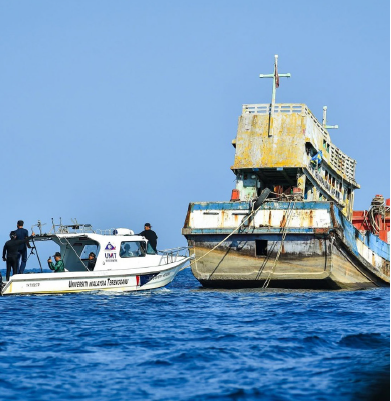
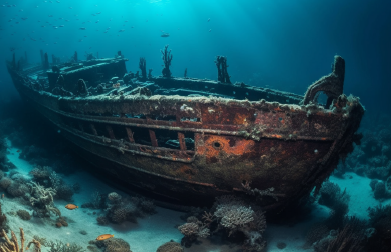
Beneath the clear waters surrounding Pulau Bidong and Pulau Melaka, century-old shipwrecks lie silent on the seabed. Preserved in time, these submerged sites hold invaluable clues to ancient trade networks, forgotten shipbuilding traditions, and centuries of cultural exchange that shaped the Malay word.
Yet, these precious archaeological resources are fragile. They face a constant threat from marine decay and human activity.
To safeguard these treasures before they are lost forever, Universiti Malaysia Terengganu (UMT) is stepping forward to lead a new era of underwater heritage conservation.
It is proposing the Bachelor of Applied Maritime History, an interdisciplinary academic programme that integrates history, archaeology, maritime heritage, geopolitics, marine governance, and emerging digital technologies.
Malaysia’s growing commitment to heritage conservation has led to renewed interest in protecting the nation’s rich cultural legacy. Alongside these developments, archaeology has also emerged as an increasingly important discipline in understanding and safeguarding Malaysia’s past.
Often misunderstood as the study of dinosaurs or fossils, archaeology is the scientific study of past societies through the recovery and analysis of material remains.
One area that has experienced significant growth in recent years is maritime archaeology, which focuses on archaeological remains found in rivers, lakes, and seas, including shipwrecks, ports, and other underwater cultural heritage.
For Malaysia, maritime heritage and archaeology is particularly significant because the country’s history has always been closely connected to the sea. The Malay World developed through extensive maritime networks that linked communities across Southeast Asia and the wider Indian Ocean.
Recent discoveries of shipwrecks around Pulau Bidong and Pulau Melaka demonstrate the enormous research potential of Malaysia’s underwater cultural heritage. These sites provide opportunities to better understand ancient trade networks, shipbuilding traditions and cultural interactions, while highlighting the importance of documenting and conserving fragile archaeological resources before they are lost to natural deterioration or human activity.
The proposed Bachelor of Applied Maritime History reflects UMT’s aspiration to produce maritime professionals with a comprehensive understanding of both the scientific and cultural dimensions of the maritime world. In line with the vision of empowering students with holistic perspectives (syumul) and strong interpersonal competencies (insaniah) in advancing global sustainability, the programme seeks to develop graduates who combine disciplinary expertise with ethical values, critical thinking, communication skills and interdisciplinary perspectives. Maritime Archaeology forms one of the key components of this new proposed programme, providing students with the knowledge and practical skills required to investigate, interpret and preserve Malaysia’s underwater cultural heritage.
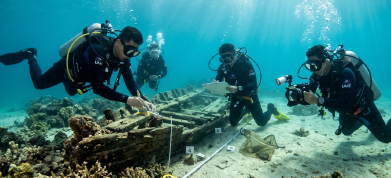
A distinctive strength of the programme lies in its emphasis on experiential learning. In addition to classroom teaching, students will undertake site visits, archaeological fieldwork and practical training that expose them to the methods used in archaeological research and heritage management. This exposure enables students to appreciate archaeology not only as an academic discipline but also as a profession that supports heritage conservation, education and public engagement.
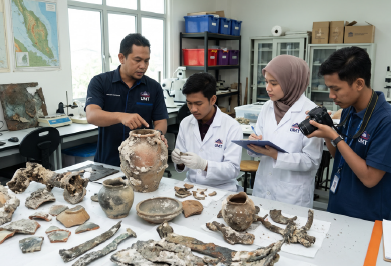
One of the programme’s greatest advantages is UMT’s ongoing research on the Bidong shipwreck. Future field schools and practical training centred on Bidong Island have the potential to provide students with first-hand experience in archaeological survey, documentation, recording and interpretation. UMT’s established strengths in marine and maritime studies further enhance the programme’s potential. Supported by laboratories, research facilities and expertise across disciplines, the university offers an environment where archaeology can be integrated with marine science, oceanography, conservation and digital technologies. The programme also aims to strengthen collaborations with museums, heritage agencies, universities and research institutions, creating a network that supports education, research and professional training in maritime archaeology.
Graduates of the programme will acquire an understanding of the principal methods employed in underwater archaeological projects, including archaeological survey, excavation, recording, conservation and the management of recovered artefacts. Beyond technical competence, they will develop an appreciation of the long-term significance of marine cultural heritage and its contribution to understanding Malaysia’s history and identity. Equipped with interdisciplinary knowledge and practical experience, graduates will be well prepared for careers as researchers, museum curators, heritage managers, educators, policymakers and cultural resource specialists in museums, universities, government agencies and the heritage industry.
As Malaysia strengthens its position as a maritime nation, there is an increasing need for professionals who can bridge history, archaeology and marine science. With its established expertise in maritime studies, growing research on the Bidong shipwreck, interdisciplinary facilities and commitment to experiential learning, UMT is well positioned to become a national centre for maritime archaeology and underwater cultural heritage.
by Nurul Hamizah Afandi,
Centre for Fundamental and Continuing Education