UMT Connects with Community in Need This Ramadan
Wednesday, 25/22026
Share This Article :
By Amirul Salam Hasan, Corporate Communications Office
Universiti Malaysia Terengganu (UMT) placed strong emphasis on community outreach during its Ihya’ Ramadan initiative, reaching out to underprivileged groups through visits, aid distribution, and welfare programmes in surrounding areas.
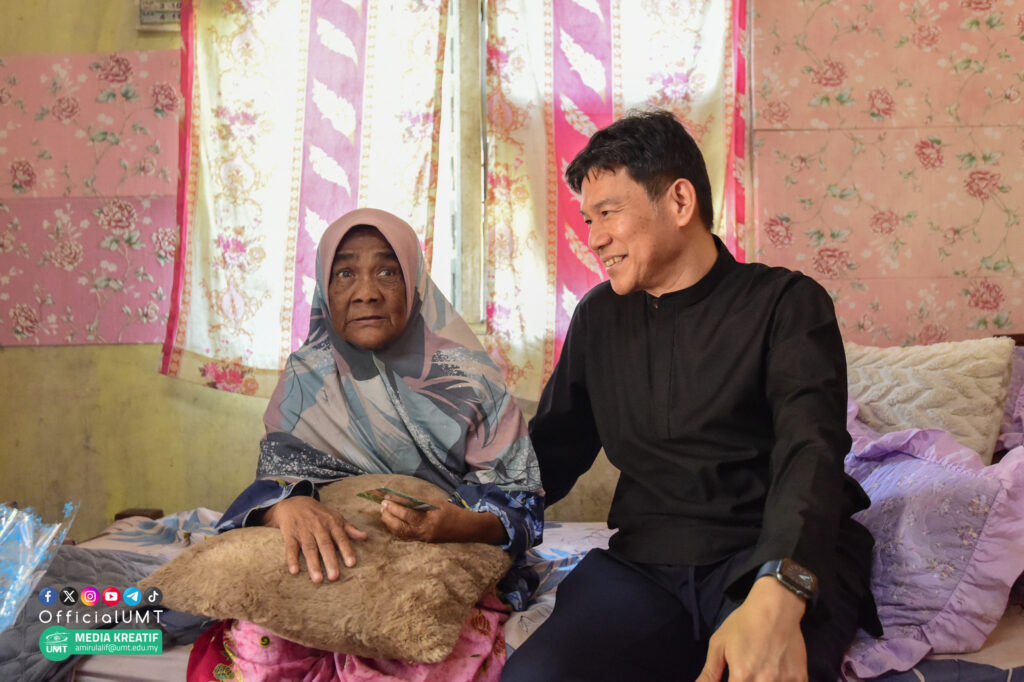
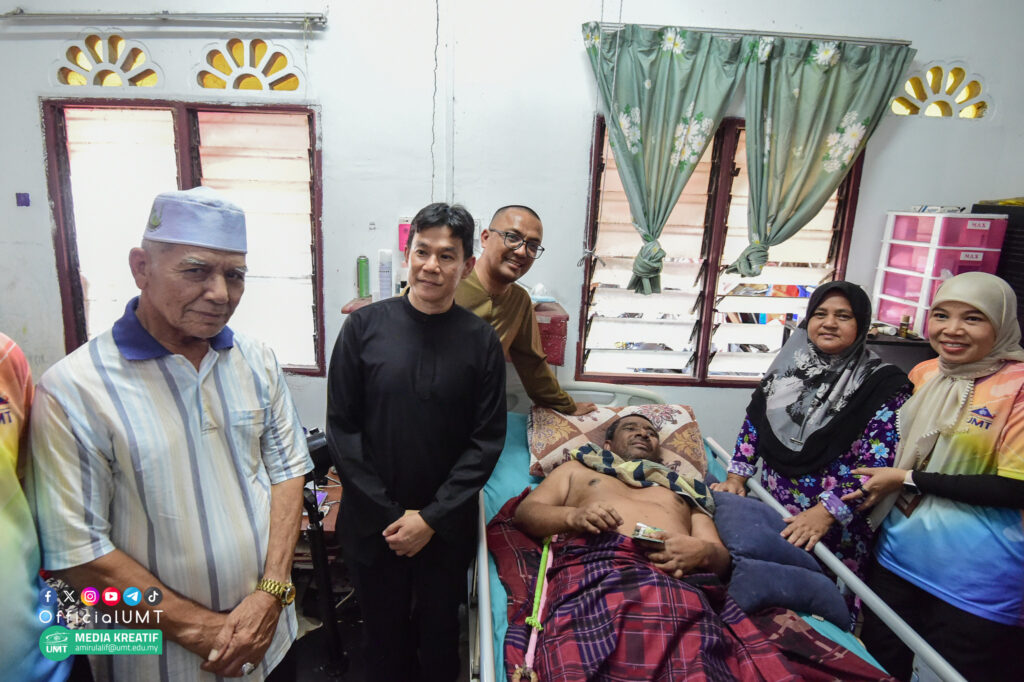
Organised by the Student Affairs and Alumni Division, the community visit programme saw contributions in the form of Ramadan care baskets and cash assistance delivered to several recipients, helping to ease their daily burdens during the fasting month.
A recipient, Khatijah Che Mat, 72, who suffers from chronic illnesses including diabetes and visual impairment, expressed heartfelt gratitude for the support.
“Thank you to UMT for taking the time to help elderly people like me. This Ramadan feels more meaningful knowing that there are still those who care,” she said.
Another recipient, Ahmad Azahar Wan Embong, 57, who is bedridden and visually impaired, said the assistance received helped reduce the strain on his family.
UMT Vice Chancellor, Prof. Ir. Ts. Dr. Mohd Zamri Ibrahim, said such initiatives reflect the university’s commitment to humanitarian values and community well-being.
“Ramadan teaches us to be more sensitive to the hardships of others. UMT always strives to ensure that its presence benefits the community, not only through knowledge but also through humanitarian outreach,” he said, adding that student involvement in volunteerism helps nurture empathy and social responsibility.
The outreach effort formed part of the broader Semarak Ramadan 2026 initiative, organised by the Sultan Mahmud Islamic Centre in collaboration with various campus associations, including PASAK, PERENTAS, KUAT, MUTIARA, and PAWE.
In addition to community visits, the programme also featured on-campus activities such as the Bubur Lambuk Cooking Programme and Rewang25@Masjid UMT. These activities brought together students, staff, and local residents in a communal cooking effort that revived the traditional rewang practice.
A total of 25 dishes were prepared, including bubur lambuk, sira pisang, sira nenas, sira nekbat, and onde-onde, before being distributed to campus residents, nearby communities, and visitors.
Student volunteer Nur Izzati Illiani Muhamad Yusoff, 22, described the experience as meaningful.
“Even though it’s tiring, the joy is greater when we see others smiling as they receive the food we prepared,” she said.
The programme also incorporated educational elements through knowledge-sharing sessions on topics such as Buy Now Pay Later (BNPL) schemes, health during Ramadan, and awareness of artificial food colouring.
The initiative highlighted the importance of compassion and community engagement, demonstrating that the university’s role extends beyond academic excellence to making a tangible difference in society.