Wednesday, 15/04/2026
Share This Article :
By Amirul Salam Hasan, Corporate Communications Office
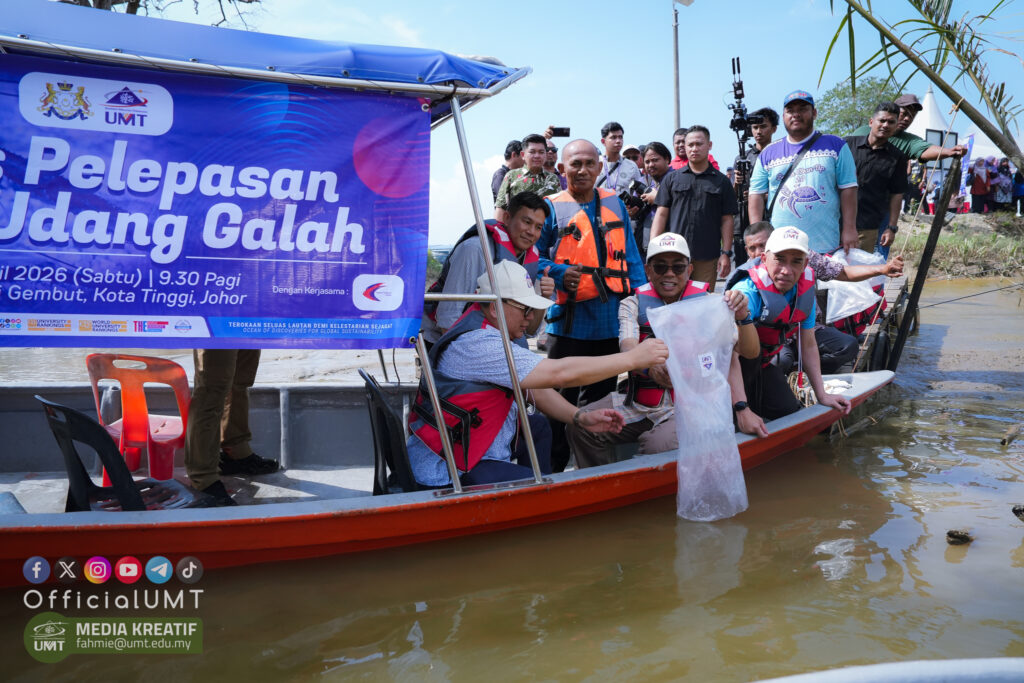
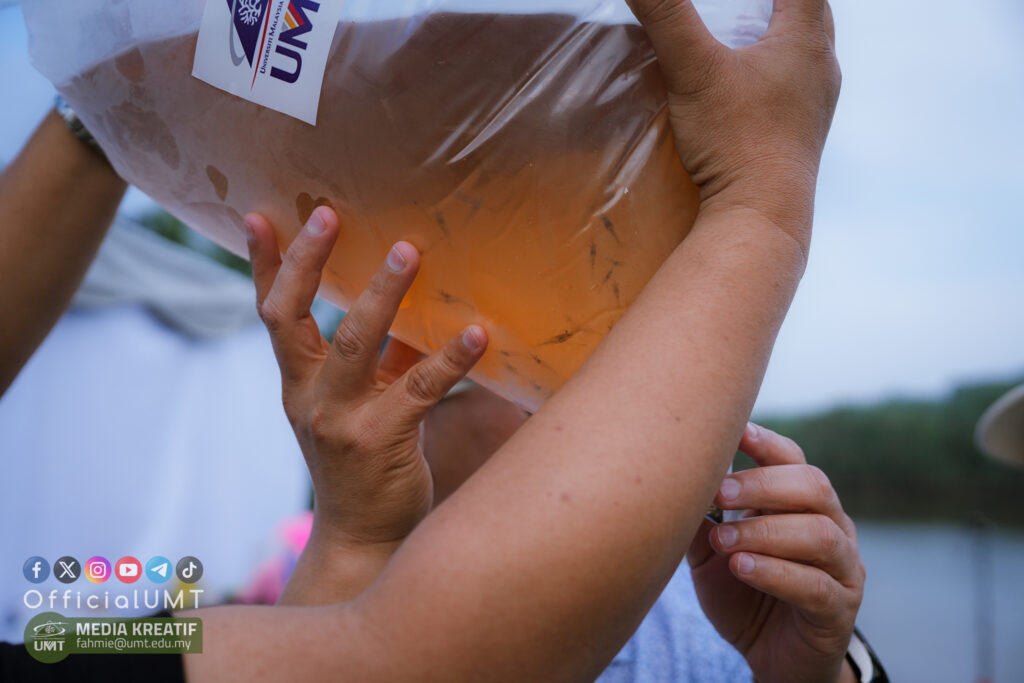
As part of its ongoing efforts to conserve freshwater biodiversity and strengthen the local fisheries economy, Universiti Malaysia Terengganu (UMT) has successfully bred 200,000 giant freshwater prawn juveniles through a controlled hatchery programme before releasing them into the Sedili Besar River at Kampung Gembut, Kota Tinggi.
The programme, carried out in collaboration with the Kota Tinggi Parliamentary Service Centre Office, the Johor State Fisheries Department and the local community, reflects UMT’s role in driving science-based conservation initiatives that link research, environment and community development.
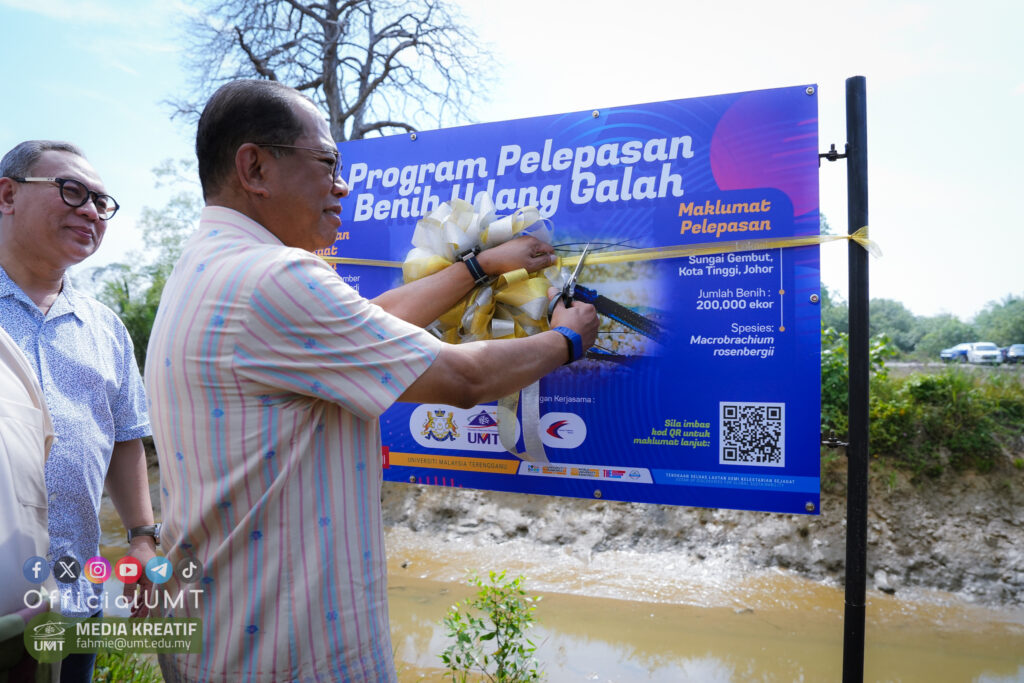
The launching ceremony was officiated by Kota Tinggi Member of Parliament, Dato’ Seri Mohamed Khaled Nordin, who described the Sedili Besar River ecosystem as having high conservation value due to its relatively intact freshwater biodiversity.
He said river systems such as Sedili Besar are rich in biodiversity and must be preserved through continued conservation efforts to ensure long-term sustainability for future generations.
UMT’s breakthrough in producing the juveniles began in late 2025, when researchers collected broodstock giant freshwater prawns from Sungai Gembut and transported them to the university’s hatchery for controlled breeding, eventually producing 200,000 juveniles for phased release back into the river.
UMT Vice Chancellor Prof. Ir. Ts. Dr, Mohd Zamri Ibrahim said the initiative demonstrates the university’s strong commitment to integrating research, conservation and community engagement through strategic partnerships.
He added that as a leading institution in marine and aquatic sciences, UMT has implemented similar seed release programmes nationwide, including in Bukit Mentok (Kemaman), Bagan Lalang (Sepang), Sedili (Kota Tinggi), Merchang Wetland and Sungai Nyatoh (Setiu), as well as coastal areas near its campus.
Beyond conservation activities, the programme also featured educational exhibitions on fisheries resources and biotechnology innovations aimed at increasing public awareness of sustainable resource management.
UMT’s Student Affairs and Alumni Division (HEPA) further supported the initiative by involving 10 students from the Lasykar Alam@UMT Squad, who shared community-based sustainability projects such as compost production from food waste, bio-pesticides for aquaponic systems, and the use of effective microorganisms (EM) in agriculture and livestock.
The initiative underscores a collaborative model between UMT, government agencies and local communities in managing natural resources sustainably.
It is also expected to enhance giant freshwater prawn populations in the river while creating potential for Sungai Gembut to develop into a centre for ecotourism, environmental education and freshwater biodiversity conservation.