Tuesday, 01/07/2025
Share This Article :
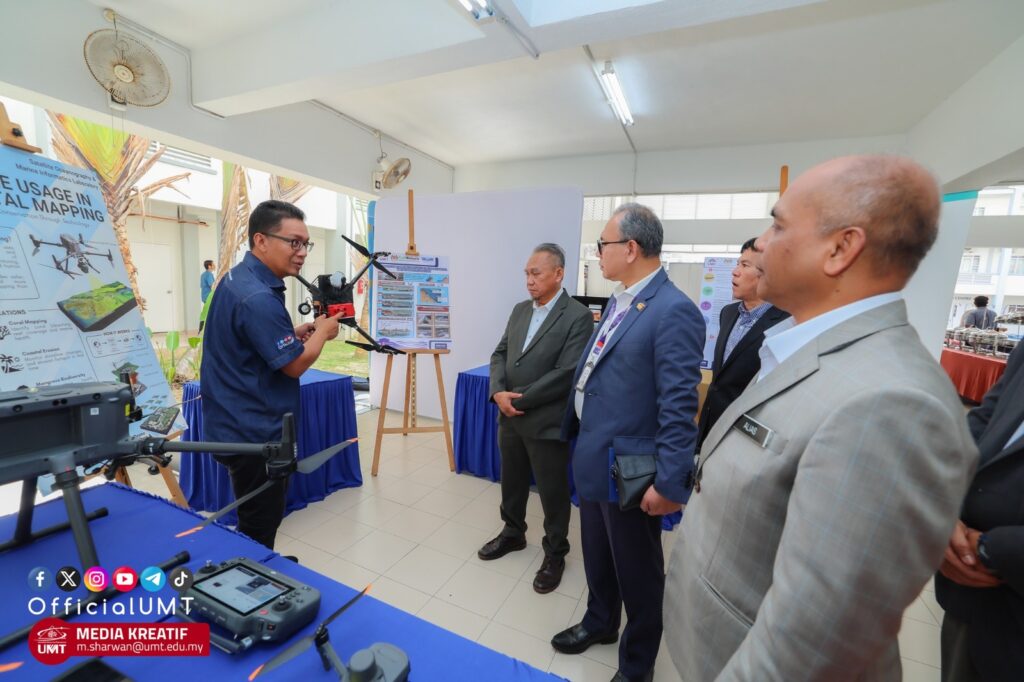
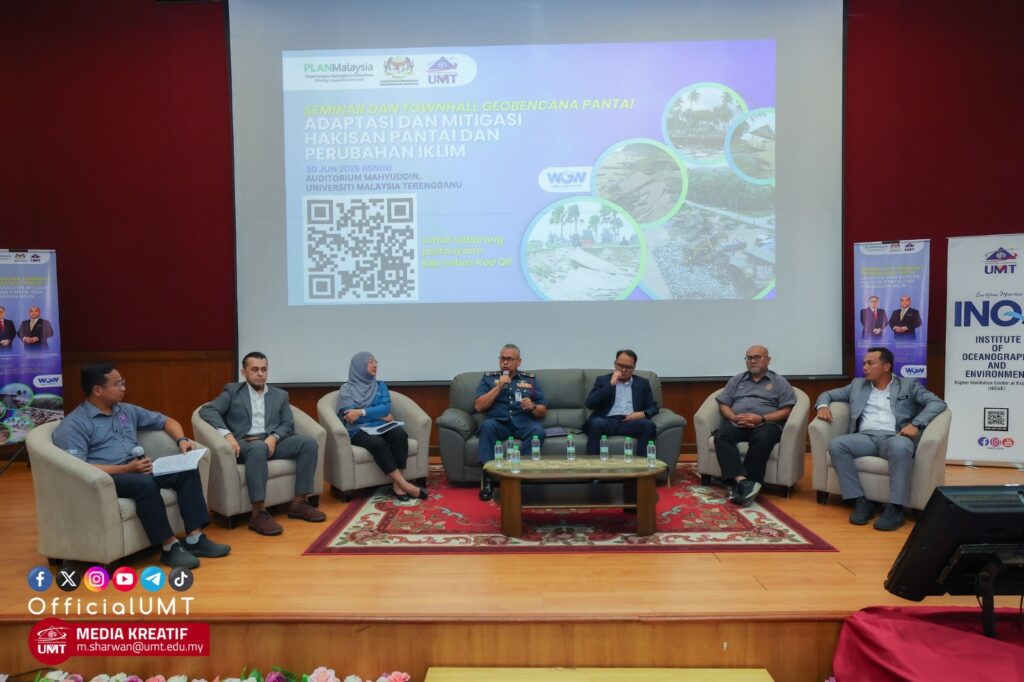
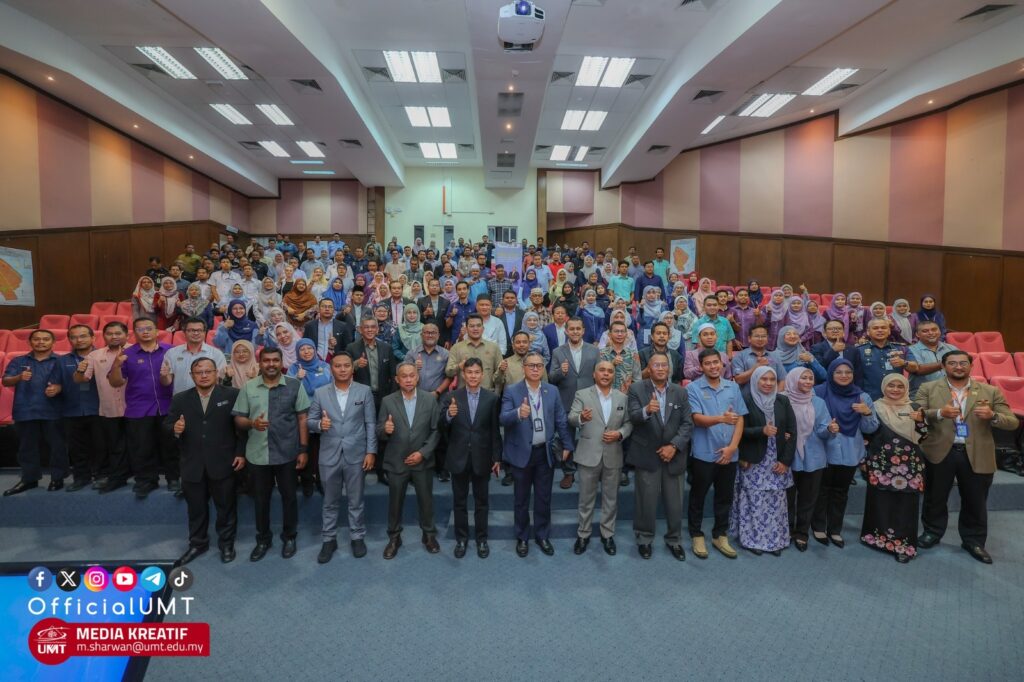
KUALA NERUS, 30 June 2025 – Universiti Malaysia Terengganu (UMT) continues to strengthen its role in addressing coastal geohazards by organizing the Coastal Geohazard Seminar and Townhall: Adaptation and Mitigation Against the Impact of Coastal Erosion and Climate Change, held today at the Mahyuddin Auditorium, UMT.
The seminar coorganized with PLANMalaysia focused on addressing the increasingly alarming issue of coastal erosion, particularly along the East Coast.
Geographically this region is open to strong monsoon winds and powerful waves, and this makes the coastal zones especially vulnerable to erosion and the effects of climate change.
UMT Vice-Chancellor Prof. Ir. Ts. Dr. Mohd Zamri Ibrahim in his officiating speech said that UMT has long played a pivotal role as a centre of excellence in marine science, fisheries, coastal management, and climate change.
“With UMT’s strategic location along the coastal land, we are not only witnesses to the effects of erosion but have made it a core focus of our research and solution-oriented innovation. Our studies include erosion risk mapping, the application of mitigation technologies such as living shorelines, and the integration of community adaptation to climate change,” he stated.
Among UMT’s highlighted strategic approaches is Marine Spatial Planning (MSP), a science-based framework aimed at balancing marine environmental protection, blue economy development, and social well-being.
This approach complements land-based physical planning and is crucial in the context of sustainable development for a maritime nation like Malaysia.
Coastal erosion is not merely an environmental concern; it directly affects traditional fishing communities who are losing boat landing areas, homes, and income sources due to the shrinking coastline.
Large waves and rising sea levels also damage coastal ecosystems such as mangrove forests, which serve as natural barriers and critical fishery habitats.
Through collaborations with agencies such as PLANMalaysia, UMT is also contributing to the formulation of holistic policies and action plans that support the nation’s Sustainable Development Goals (SDGs) and Blue Economy objectives.
This commitment is reflected in the National Coastal Zone Physical Plan, which is now starting to integrate marine aspects into national planning.
Oceans cover over 70% of the Earth’s surface, supply more than 50% of the planet’s oxygen, and are home to about 80% of global biodiversity.
More interestingly, about 70% of Malaysia’s population lives near coastal areas and depends on marine resources and ecosystems for their livelihoods.
The Vice-Chancellor also expressed hope that the seminar would not merely be a platform for discussion but a catalyst for integrated and sustainable action in facing the pressing issue of erosion caused by climate change.
“The synergy between researchers, policymakers, and communities needs to bolster to produce real solutions to this challenge.”
He added that UMT implements various conservation initiatives through platforms such as seminars and debates, demonstrating its commitment not only to leading research in marine science but also to advocacy, planning, and education as part of the efforts to protect the nation’s coastal zones.
Published by:
Corporate Communications Office
Universiti Malaysia Terengganu